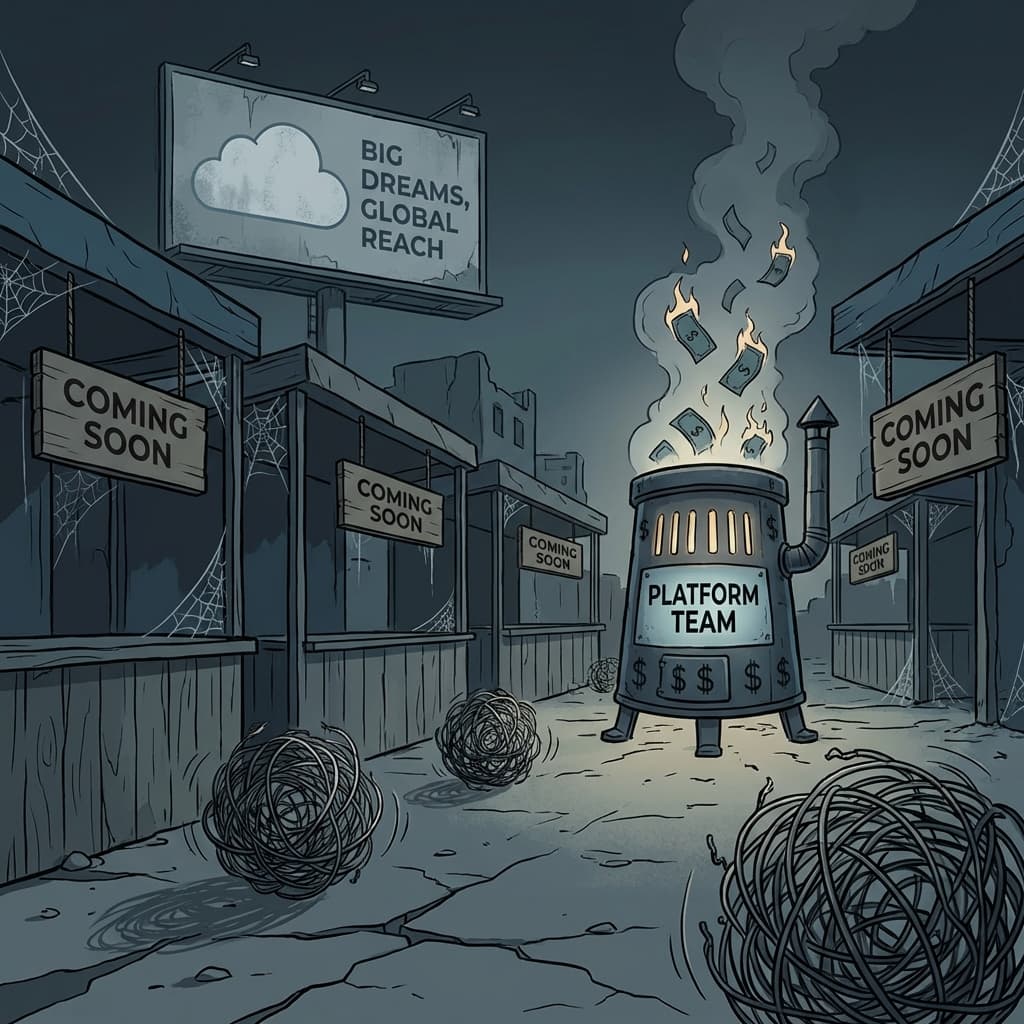
The conference sponsorship playbook is simple and universally adopted: buy a sponsorship package, get a booth, send your team to stand there, scan badges, collect leads, follow up after the event. Everyone does it. The booths are always packed. It must work.
We did this for three years. We tracked our numbers religiously. Here's what we found: it didn't work. Not even close.
This is the story of how we spent over $400,000 on conference sponsorships, generated almost no revenue, and eventually discovered much more effective alternatives that cost less and delivered more.
The Investment
We were a B2B SaaS company selling to mid-market and enterprise buyers. Our average contract value was $24,000/year. The marketing team believed conference presence was essential for brand building and lead generation.
Our annual conference sponsorship budget:
- Booth sponsorship fees: $80,000 across 4 major conferences
- Booth design and materials: $25,000
- Travel and lodging for booth staff (12 people across events): $30,000
- Swag (t-shirts, stickers, stress balls, the usual): $10,000
- Lead scanning tools and follow-up systems: $5,000
Total annual investment: $150,000
For reference, that's approximately 6 months of a senior sales rep's fully-loaded cost—including salary, benefits, commission, and overhead. One person, or conference booths at four events. We chose booths.
The Metrics We Tracked
We were rigorous about tracking outcomes. Every badge scan was logged in our CRM. Every follow-up email was tracked. Every meeting was recorded. Every closed deal was attributed.
Year One
| Metric | Value |
|---|---|
| Badge scans | 2,100 |
| Follow-up emails sent | 2,100 |
| Email responses | 126 (6%) |
| Meetings scheduled | 45 |
| Sales Qualified Leads (SQLs) | 18 |
| Proposals sent | 6 |
| Closed deals | 2 |
| Total contract value | $48,000 |
Year 1 ROI: -68%
We spent $150,000 to generate $48,000 in first-year contract value. Even accounting for customer lifetime value (average customer stayed 3 years), we were looking at $144,000 total value from $150,000 investment. Barely break-even if everyone renewed perfectly, which they didn't.
Year Two
| Metric | Value |
|---|---|
| Badge scans | 2,400 |
| Email responses | 144 (6%) |
| Meetings scheduled | 52 |
| SQLs | 22 |
| Proposals sent | 7 |
| Closed deals | 2 |
| Total contract value | $36,000 |
More badge scans, same number of deals, lower total value. One of the deals was a smaller company than our typical customer. We were getting better at collecting leads and worse at converting them.
Year 2 ROI: -76%
Year Three
| Metric | Value |
|---|---|
| Badge scans | 2,800 |
| Email responses | 140 (5%) |
| Meetings scheduled | 48 |
| SQLs | 20 |
| Proposals sent | 5 |
| Closed deals | 1 |
| Total contract value | $18,000 |
Year 3 ROI: -88%
By year three, response rates were declining (people were getting better at ignoring conference follow-ups), and we closed exactly one deal. Three years. $450,000+ spent. Five customers acquired. $102,000 in first-year contract value.
Customer acquisition cost per conference customer: $90,000
Our target CAC was $8,000. Conference-acquired customers cost 11x our target. This was a disaster.
Why Conference Booths Fail
After three years of data, we analyzed what went wrong. The problems were structural, not tactical.
The Wrong People Are Scanning
Who attends conference expo halls? We analyzed our badge scan data against LinkedIn profiles and company information:
- Students and job seekers: 35% of scans. Young professionals exploring the industry, collecting swag, and looking for jobs. Zero purchasing authority. Zero purchasing intent.
- Competitor scouts: 15% of scans. People from competing companies collecting our materials to analyze our messaging. Not customers.
- Unqualified companies: 25% of scans. Companies too small for our product, in the wrong industry, or in the wrong geography.
- Current customers: 10% of scans. People who already paid us, stopping by to say hi. Nice, but not new revenue.
- Actual qualified prospects: 15% of scans. Maybe 300-400 people per year with potential to become customers.
We were paying for 2,800 leads to reach 400 qualified ones. 86% waste rate.
Meanwhile, the actual budget decision-makers—VPs and C-suite executives at target companies—weren't walking the expo hall. They were in private meetings, executive lounges, or attending keynotes. The people with authority to buy weren't browsing booths.
Commodity Attention
A typical conference expo hall has 50-100 booths. Attendees have limited time. They're walking quickly, half-distracted, thinking about their next session or their evening plans.
The average booth conversation lasted 2-3 minutes. In that time, we delivered a rushed elevator pitch against a backdrop of noise, with the person already looking toward the next booth. We weren't having meaningful conversations—we were speed-dating with people who weren't looking to date.
Nobody remembers specific booths after a conference. They remember keynotes. They remember great sessions. They remember conversations over dinner. Booths blend into a undifferentiated sea of pop-up banners and branded stress balls.
Post-Event Inbox Death
Conference attendees return home to overflowing inboxes. They've been out of office for 2-4 days. They have hundreds of emails. And now they get 40-50 more emails from every booth they walked past.
Our carefully crafted follow-up email joined that flood. Open rates: 18%. Response rates: 6%. And most responses were "please remove me from your list" or "not interested."
The badge scan gave us permission to email once. It didn't give us permission to matter. We'd interrupted someone's conference experience for a badge scan, and now we were interrupting their return to work with an email they didn't want.
Wrong Stage Buyers
People at conferences are in exploration mode, not buying mode. They're learning about trends, seeing what's new, gathering information for future consideration.
Our sales cycle was 6-9 months. Someone who learned about us at a March conference might be ready to buy in December. By then, they'd forgotten the booth conversation entirely. When they actually entered a buying cycle, they did their own research—they didn't return to the stack of booth brochures they'd collected.
Conference leads were cold by the time they mattered. The timing mismatch was fundamental.
The Alternatives We Discovered
If booth sponsorships didn't work, what did? We experimented with several alternatives and found dramatically better ROI.
Speaking Slots (Not Sponsorships)
Instead of paying to stand in an expo hall, we submitted to speak at sessions. This required actual expertise and preparation, but the payoff was extraordinary.
A 30-minute session gave us 30 minutes of focused attention from an audience who specifically chose to attend our topic. No noise. No competition for attention. Pure thought leadership positioning.
Sessions attracted better prospects. Someone who attends "How We Reduced Infrastructure Costs by 50%" is actively thinking about infrastructure costs. They're further along in considering solutions. They're more qualified than random expo hall traffic.
Sessions generated warmer leads. People approached us after the talk with specific questions about their specific situations. These were real conversations, not badge-scan pleasantries. Follow-up emails to session attendees had 40% open rates and 15% response rates—versus 18% and 6% from booth scans.
And here's the kicker: speaking slots were often free. Conferences want good content. If your talk is valuable, they'll give you the slot. We replaced $150,000 in sponsorship fees with $25,000 in speaker travel and preparation. Same conferences, better results, 84% cost reduction.
Intimate Executive Dinners
Instead of broadcasting to thousands, we focused on reaching dozens. We hosted invitation-only dinners during conferences, targeting specific executives at specific companies we wanted to reach.
Format: Rent a private dining room at an excellent restaurant. Invite 10-12 carefully selected executives from target accounts. Bring one or two of our executives and one subject matter expert. No slides. No pitches. Just a great meal and focused conversation on industry challenges.
Cost per dinner: $3,000 (restaurant, wine, transportation). Conversion rate to sales conversation: 40%. Conversion to closed deal within 12 months: 15-20%.
From $3,000, we typically generated 1-2 closed deals worth $40,000-60,000 in annual contract value. That's 1,300%+ ROI. Compare that to booth ROI of -88%.
The dinners worked because they created genuine relationships. We weren't pitching—we were hosting. The executives felt valued, not marketed-to. When they had a relevant problem three months later, they remembered the dinner and reached out.
Targeted One-on-One Meetings
Before each conference, we researched the attendee list (when available) or used LinkedIn to identify target executives who were likely attending. We reached out directly requesting 1:1 meetings during the conference.
"I'll be at [Conference] and would love 20 minutes to discuss [Relevant Topic]. Coffee on me."
Response rate: 15% agreed to meetings. From a targeted list of 100 executives, we'd schedule 15 meetings. Cost: time + coffee. Close rate from these meetings: 10% within 12 months.
Fifteen meetings → 1-2 customers → $24,000-48,000 in ACV → from essentially zero additional cost beyond conference attendance.
Customer Speaking Sessions
Instead of us speaking about our product, we paid for customers to speak about their success. "How [Customer Company] Transformed Their [Process] with [Outcome]."
Third-party credibility is worth more than self-promotion. Audiences are skeptical of vendor sessions but trust peer testimonials. The customer's brand lent credibility we couldn't buy directly.
We covered the customer's conference expenses and sometimes provided a modest speaking fee. Total cost: $5,000-8,000 per customer speaker. But the resulting leads were exceptionally warm—they'd heard a peer recommend us from the stage.
The New Budget and Results
We reallocated our $150,000 conference budget:
| Activity | Annual Spend | Customers Acquired | Revenue Generated | ROI |
|---|---|---|---|---|
| Speaking (prep + travel) | $25,000 | 8 | $192,000 | +668% |
| Executive dinners (8 events) | $24,000 | 6 | $144,000 | +500% |
| 1:1 meeting program | $8,000 | 4 | $96,000 | +1,100% |
| Customer speakers | $15,000 | 4 | $96,000 | +540% |
| Total | $72,000 | 22 | $528,000 | +633% |
We cut our conference spend by 52% and generated 7x more customers and 5x more first-year revenue.
The ROI improvement was even more dramatic: from -88% (booth era) to +633% (new approach). An 1,800+ percentage point swing.
When Booths Might Actually Work
We're not saying booths never work. They might make sense in specific circumstances:
High-volume, low-ACV products: If your product costs $100/month and you're trying to reach millions of potential users, booth volume math might work. You need quantity, not quality. Consumer products at consumer conferences (CES, for example) follow this model.
Pure brand awareness goals: If you're a late-stage startup trying to establish category presence and don't need direct ROI, booth visibility might contribute. But understand you're buying brand, not pipeline.
Booth experiences that draw crowds: Some booths do remarkable things—interactive demos, famous speakers, compelling experiences. If you can create something people talk about after the conference, the booth becomes word-of-mouth amplification. This requires creativity and budget beyond the typical pop-up banner.
Industry events where booth-visiting is normal buyer behavior: Some niche industries have trade shows where buyers specifically visit booths to compare vendors. Manufacturing trade shows, for instance. Know your industry's norms.
For B2B SaaS selling $20K+ contracts to mid-market and enterprise buyers? Booth ROI is almost always negative. The math doesn't work.
The Uncomfortable Truth
Conference sponsorships feel productive. You're doing something visible. You can tell your board "we had a presence at 4 major conferences." You have photos of your team at the booth. You have stories about conversations. The logo is on the conference website.
But feelings aren't revenue. Activity isn't impact. Visibility isn't pipeline.
We sponsored conferences for three years because it felt like what successful companies did. We'd see competitors with bigger booths and feel anxiety about being left behind. We'd meet prospects who said "I saw you at the conference" and assume the investment was working.
Only when we tracked end-to-end ROI did we realize we were burning money. The vanity of booth presence had blinded us to the reality of booth performance.
Questions to Ask Before Sponsoring
- What is your target cost per acquired customer? If your target CAC is $10,000 and your booth costs $50,000, you need to close 5+ customers to break even. Is that realistic based on historical data?
- Who actually walks the expo floor at this conference? Are they your buyers, or are they junior people, students, and competitors?
- What is your sales cycle length? If it's 6+ months, booth leads will be cold before they're ready. Can you nurture them effectively for that long?
- What alternatives exist at this conference? Can you speak instead? Can you host a dinner? Can you get 1:1 meetings through direct outreach?
- What does your historical data show? If you've sponsored before, what was the actual ROI? Not the "leads generated" vanity metric—the actual closed revenue divided by all-in costs.
If you can't answer these questions with data, you're sponsoring on faith. Faith is appropriate for religion, not marketing budgets.
Conference booths deliver badge scans, not customers. Focused conversations deliver customers. When measuring conference ROI end-to-end, booths almost never survive scrutiny. Invest in conversations, not square footage.
Written by XQA Team
Our team of experts delivers insights on technology, business, and design. We are dedicated to helping you build better products and scale your business.