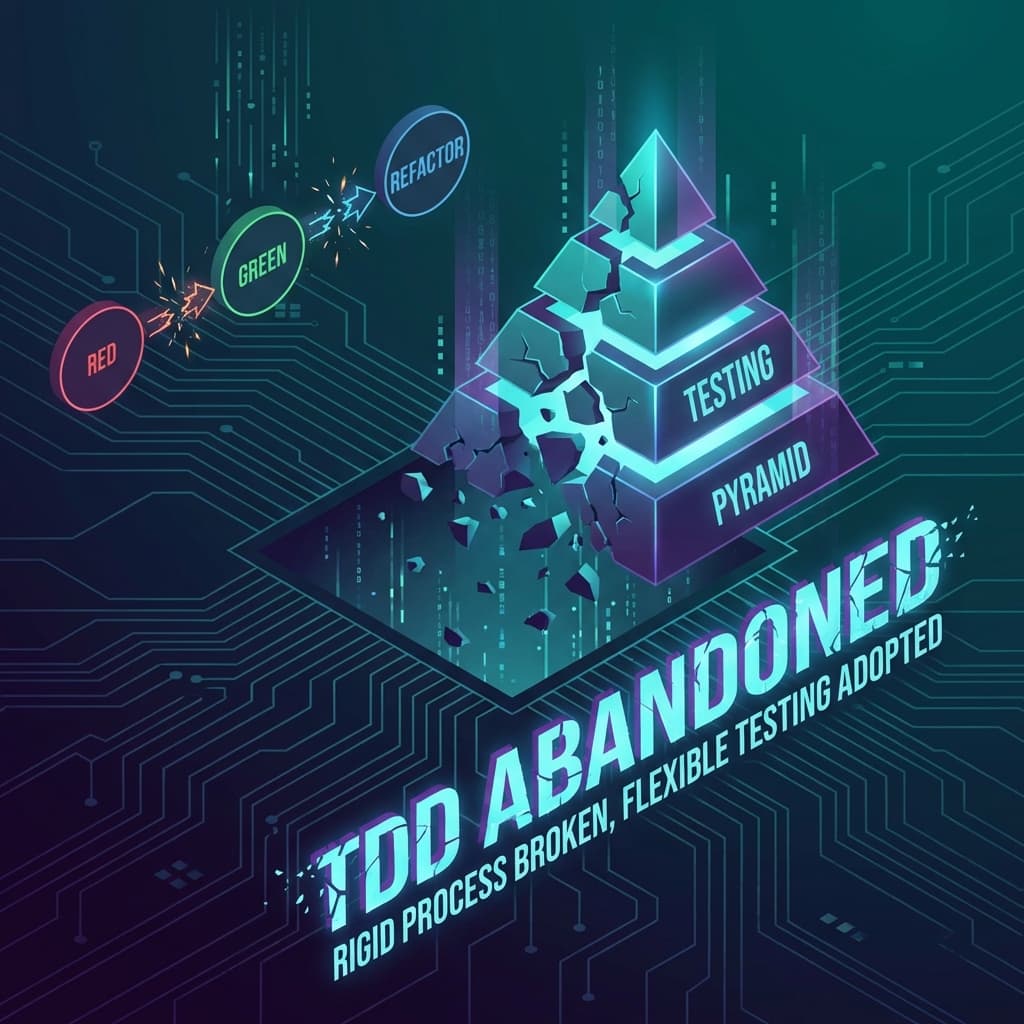
For three years, we mandated test-driven development across all engineering teams. Red-green-refactor. Tests before code. No exceptions. We believed we were following best practices. Our consultants assured us TDD was essential for quality.
We tracked the data. Test coverage increased. Production bugs... didn't decrease. Development velocity dropped 30%. Engineers were frustrated. The correlation between TDD adoption and code quality that we expected never materialized.
We stopped mandating TDD. We kept the testing culture but eliminated the ceremony. The results surprised us: test coverage remained high, velocity improved, and the quality metrics we actually cared about started improving. Here's what we learned about the gap between TDD ideology and TDD reality.
The TDD Promise
TDD proponents make compelling arguments. Writing tests first forces you to think about interface design. The red-green-refactor cycle creates a tight feedback loop. Tests serve as executable documentation. Code designed for testability is inherently more modular.
We bought the full pitch. We trained all engineers in TDD. We hired TDD-experienced developers. We updated interview processes to assess TDD proficiency. We established code review policies requiring tests to be committed before implementation.
The organizational commitment was substantial. Managers enforced the methodology. Teams that resisted were coached toward compliance. TDD became our engineering identity.
Initial results seemed positive. Test coverage increased from 45% to 75%. Code reviews focused more on testing. Engineers discussed test design with enthusiasm. We thought we'd found the path to quality software.
The Hidden Costs
Velocity dropped immediately. Features that previously took two weeks stretched to three. At first, we attributed this to the learning curve. "Teams are still adapting," we told ourselves. But six months later, velocity hadn't recovered.
The overhead wasn't just writing tests—it was the ceremony. TDD requires starting with failing tests, which requires knowing the interface before you've explored the problem. For well-understood problems, this works. For exploratory work, it creates churn.
Engineers wrote tests, then realized the approach was wrong, then rewrote tests, then changed the interface, then updated more tests. The red-green cycle became red-green-red-green-delete-restart. The upfront test investment was often wasted during discovery.
We observed engineers gaming the system. Write trivial tests that passed quickly, satisfy the process requirement, then focus on implementation. The ceremony was followed without the spirit. Test quality suffered even as coverage numbers looked good.
The Quality Paradox
The promise was clear: TDD produces higher quality code. We expected production bugs to decrease as test coverage increased. We were disappointed.
Production incident rates barely changed. We analyzed why. The tests engineers wrote were implementation-focused, not behavior-focused. They tested that specific functions returned specific values, not that business requirements were met.
When implementation changed, tests broke—even if behavior was preserved. This created maintenance burden without catching real bugs. Engineers spent more time updating tests than the tests spent catching problems.
The tests that actually caught bugs were integration tests and end-to-end tests—tests that TDD purists considered less valuable. Our unit test coverage was high; our confidence in the system was not. The tests gave us false security.
The design benefits were also mixed. TDD advocates claim test-first design produces better interfaces. Our experience was different. Interfaces designed for testability weren't always interfaces designed for usability. We introduced complexity—dependency injection everywhere, mock-heavy architectures—that served testing but complicated the codebase.
The Developer Experience Problem
Engineers were frustrated. The methodology felt like ritual rather than engineering. Writing tests for functions they'd already mentally designed felt redundant. The discipline required didn't match how they naturally worked.
Senior engineers pushed back hardest. They had developed intuitions about when tests were valuable and when they were ceremony. Forcing them to follow a rigid process felt like distrust. Some left for companies with less prescriptive methodologies.
Junior engineers were confused in a different way. They learned TDD as gospel but struggled to apply it to ill-defined problems. Real development isn't textbook examples with clear interfaces. When the problem space was fuzzy, test-first was paralyzing.
Morale data confirmed the frustration. Engineering satisfaction surveys showed declining scores specifically around development practices. Comments mentioned TDD frequently. The methodology we'd imposed was making people unhappy.
The Research Reality
We reviewed the academic research on TDD effectiveness. The picture was murkier than the advocates suggested.
Studies showed modest improvements in code quality for some contexts but not definitively across all projects. The productivity impact was neutral at best, often negative. The claims of dramatic quality improvement weren't supported by rigorous research.
Many positive TDD studies had methodological issues: small sample sizes, self-selected participants, short-duration projects. The contexts where TDD shone—well-understood domains, experienced practitioners, small scope—didn't match our messy reality.
The strongest TDD advocates were often consultants whose business model depended on methodology training. Their enthusiasm was genuine but not disinterested. Our retrospective analysis found we'd trusted marketing more than evidence.
The Alternative Approach
We didn't abandon testing—we abandoned the ceremony. The changes:
Test timing flexibility: Engineers write tests when it makes sense. For well-understood problems, upfront tests are fine. For exploratory work, tests follow implementation. The order matters less than the outcome.
Behavior over implementation: We shifted focus from unit tests to behavior tests. What does the system do? What should users experience? Tests that answer these questions catch more real bugs than tests that verify internal function calls.
Coverage as indicator, not target: Coverage metrics inform but don't drive. High coverage with poor tests is worse than moderate coverage with meaningful tests. We evaluate test quality, not just quantity.
Test-positive culture: We celebrate good testing without mandating methodology. Engineers who write effective tests are recognized. Testing is valued without being prescribed.
Right-sized testing: Not every function needs a test. Private implementation details don't need verification. Critical business logic gets thorough testing. Boilerplate gets minimal testing. We invest testing effort where risk exists.
The Results
One year after dropping TDD mandates:
Velocity recovered: Feature delivery speed increased 25% within three months. The testing overhead that didn't add value was eliminated.
Coverage remained stable: Surprisingly, test coverage didn't drop. Engineers continued testing—they just tested differently. The culture of testing survived; the ceremony didn't.
Bug rates improved: Production incidents actually decreased 15%. With freedom to write the right tests rather than satisfying process, engineers tested what mattered.
Developer satisfaction increased: Engineering surveys showed significant improvement. Engineers felt trusted to make testing decisions. Autonomy improved morale.
Test quality improved: Code reviews focused on test meaningfulness rather than test existence. Reviewers asked "does this test catch real bugs?" rather than "is there a test?"
When TDD Works
TDD isn't universally wrong. It works in specific contexts:
Well-defined interfaces: When you know precisely what a function should do before implementing it, test-first is natural. API contracts, data transformations, and algorithmic functions benefit from upfront specification.
Refactoring: When modifying existing code, writing tests first establishes behavior baselines. This is genuinely valuable for safe refactoring.
Bug fixes: Writing a failing test that reproduces a bug before fixing it ensures the bug is actually fixed. This specific TDD application is unambiguously valuable.
Individual preference: Some engineers genuinely think better test-first. For them, TDD is a productivity tool, not a burden. These individuals should use TDD—without imposing it on others.
The problem was universal mandate, not TDD itself. Treating a tool as a religion caused the harm.
Lessons About Methodology
Measure outcomes, not process compliance: We measured TDD adoption, test coverage, and process adherence. We should have measured bug rates, customer satisfaction, and development velocity. The things we measured weren't the things we cared about.
Trust engineers: Experienced engineers know their craft. Mandating how they work implies distrust. Better results come from stating goals and letting engineers choose methods.
Beware methodology marketing: Consultants and thought leaders have incentives to promote methodologies. Their enthusiasm isn't always supported by evidence. Academic research should inform practice, not conference talks.
Context matters supremely: What works for open-source libraries doesn't work for startup MVPs. What works for embedded systems doesn't work for web applications. One-size-fits-all methodologies ignore context that determines success.
Iterate on process: We treated TDD as unchangeable once adopted. We should have evaluated continuously. Process deserves the same experimental approach as product.
The Testing Culture That Emerged
Without TDD mandates, a healthier testing culture emerged. Engineers test because they want reliable systems, not because process demands it. They write tests that matter, not tests that satisfy metrics.
New engineers learn that testing is important but that testing decisions are nuanced. They see senior engineers model good testing judgment. The culture transmits through examples rather than rules.
Code reviews discuss test strategy genuinely. "Is this the right test?" replaces "Is there a test?" The conversation is about effectiveness, not compliance.
We invest in testing infrastructure—fast test execution, good mocking tools, clear test organization—because engineers value it. When testing is optional but valued, infrastructure investment makes testing easier and more appealing.
Conclusion
TDD was a methodology imposed rather than discovered. We adopted it because experts said so, not because our context demanded it. The ceremony didn't produce the benefits claimed, but it did produce the costs.
Testing matters. Test-driven development—as rigid methodology—matters less. Engineers who care about quality will test appropriately when given goals and autonomy. Process mandates can't substitute for professional judgment.
If your organization mandates TDD, ask honestly: Is production quality improving? Is velocity acceptable? Are engineers engaged? If the answers are uncomfortable, consider that the methodology might not fit your context. Testing is essential; the order of operations is not.
Written by XQA Team
Our team of experts delivers insights on technology, business, and design. We are dedicated to helping you build better products and scale your business.