The Engagement Trap
Every Product Manager wants "Engagement." They want Daily Active Users (DAU). They want "Session Duration." They want you to live in their app.
But ask yourself: Do you want to live in your banking app? Do you want to "engage" with your parking meter app?
No. You want to pay the bill and get on with your life.
We realized that for 90% of B2B and utility software, Time on Site is a negative metric. If a user spends 20 minutes in our dashboard, it usually means they are confused, frustrated, or lost.
The "Get In, Get Out" Philosophy
We redesigned our entire workflow with a new North Star metric: Time to Success.
1. Removing the Dashboard
We realized the "Dashboard" was vanity. Charts, graphs, "Recent Activity"—nobody looked at it. It was just noise stopping them from the one button they clicked 99% of the time: "Create Report."
We deleted the dashboard. Now, when you log in, you are immediately in the "Create Report" flow. We saved every user 3 clicks and 4 seconds per session. Across 10,000 users, we saved a human lifetime of boredom.
2. "Success" Means Goodbye
Traditional design patterns put a "What now?" screen after a task is done. "View detailed stats," "Share this," "Check out other features."
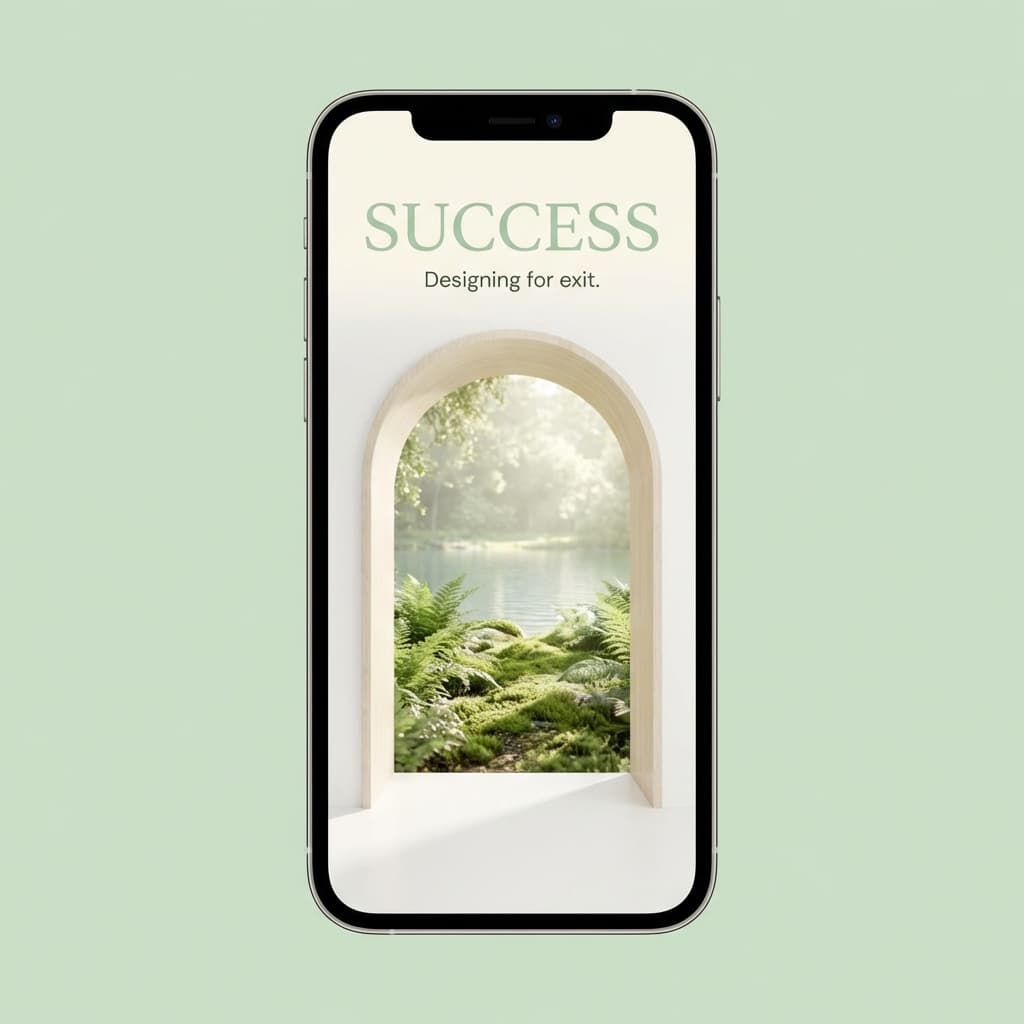
We changed our success screen to a dead end. It says "Report Sent." And it gives you one button: "Close Tab."
It feels radical. It feels "anti-retention." But our Net Promoter Score (NPS) shot up 40 points. Users verify that we respect their time.
The Psychology of Completion
The Zeigarnik effect states that people remember uncompleted or interrupted tasks better than completed ones. This creates mental load. "Did I pay that bill? Did the email go through?"
By designing a definitive "Exit" experience—a clear, unambiguous signal that the task is over—we give users the gift of cognitive closure. They can close the tab and delete the task from their brain RAM.
Dark Patterns vs. Light Patterns
Dark Patterns (like the "Roach Motel" design that makes it easy to get in but hard to cancel) prioritize short-term business metrics over human value.
We are proposing "Light Patterns": Design that prioritizes human value over business metrics, trusting that trust is the ultimate retention strategy.
If you let people leave, they will come back when they need you. If you trap them, they will break the door down to escape.
Conclusion
Stop optimizing for eyes-on-screen. Optimize for value-delivered. If your product is a utility, the best interface is no interface. The best interaction is the one that didn't need to happen.
Written by XQA Team
Our team of experts delivers insights on technology, business, and design. We are dedicated to helping you build better products and scale your business.