The $50,000 "Reader"
We purchased a $50k/year B2B SaaS tool. The contract included a "Dedicated Customer Success Manager" named Dave.
We booked our onboarding call. For 60 minutes, Dave literally read the PDF documentation to us over Zoom.
"Click here to invite a user," he narrated. "Now click here to set permissions."
I realized: I was paying a $10k premium on this contract for a human to do what a good UI should have done in 5 seconds.
We were bleeding efficiency because the product was too lazy to teach itself. I cancelled the contract and found a competitor with a better UI.
Later, at my own company, I fired our Customer Success team. Here is why.
Section 1: The "Human Patch" for Bad UX
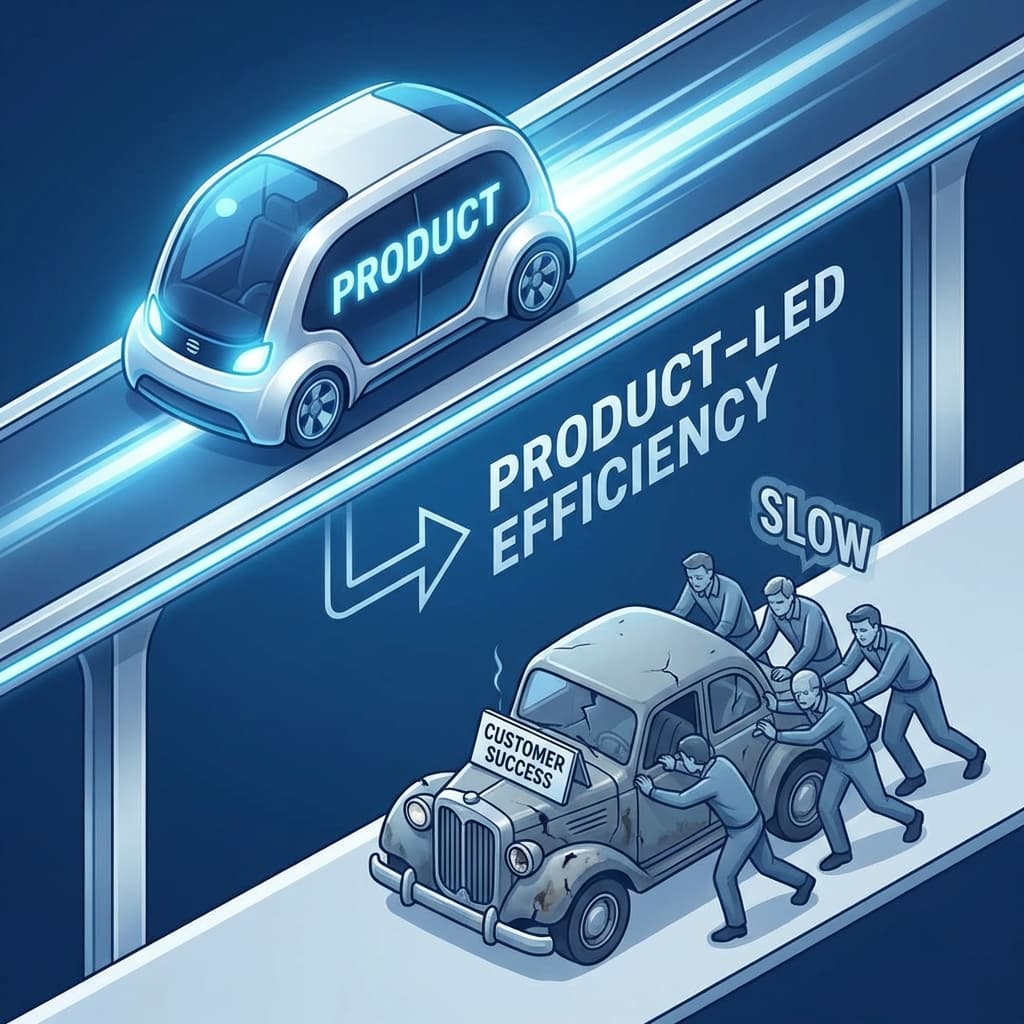
In Enterprise SaaS, "White Glove Onboarding" is often an excuse for lazy product design.
The Crutch: If you need a human to explain how to invite a user or set up a dashboard, your UI has failed.
The Metric: Look at "Time to Value" (TTV).
- With Humans (CS): TTV is measured in weeks (scheduling calls, back-and-forth emails).
- With Self-Serve (UX): TTV is measured in minutes.
By relying on CS, you mask the pain of your bad UX. You stop feeling the friction because Dave bridges the gap. Fire Dave, and suddenly the Product Team has to fix the friction.
Section 2: Learned Helplessness
When you assign a "Success Rep" to an account, the customer stops trying to learn the tool.
The "Do It For Me" Trap: Support tickets explode because users email Dave: "Hey, can you export this report for me?" instead of clicking the "Export" button.
They become dependent. And your margins collapse. You are essentially running a low-margin Service Consultancy disguised as a high-margin SaaS.
Section 3: Product-Led Growth (PLG) is Ruthless
PLG means the product does the selling, the teaching, and the supporting.
The Pivot: We fired our CS team. We took that budget and hired 3 extra UX Designers and 1 Technical Writer.
We built a "Wizard" that guided users through setup step-by-step. We added tooltips. We improved error messages.
The Result: Conversion rate tripled. Churn dropped. And importantly, we stopped selling to people who couldn't figure it out (see: Firing Customers).
Section 4: Relocating the Budget to "Docs & Community"
Modern buyers (Gen Z/Millennials) hate talking to humans. They don't want a "check-in call." They want to read the docs or watch a 2x speed Loom video.
The Investment: Take the $1M CS payroll and spend it on world-class API documentation, interactive guides, video tutorials, and a community forum.
Let the users help themselves. They prefer it.
Conclusion
A great product explains itself.
A bad product hires a Customer Success department to apologize for it.
Written by XQA Team
Our team of experts delivers insights on technology, business, and design. We are dedicated to helping you build better products and scale your business.