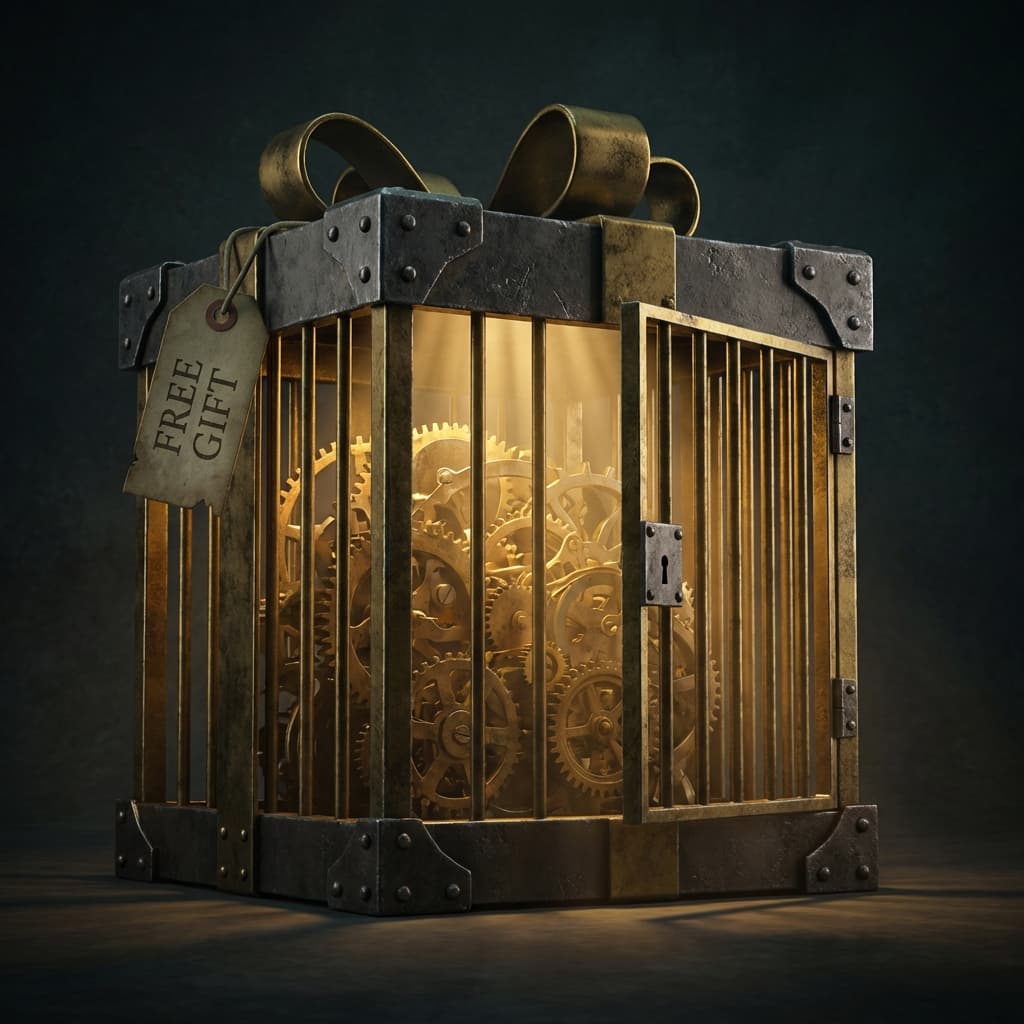
The Free Lunch Illusion
In 2024, I made a decision that looked great on a spreadsheet. I cancelled our enterprise contract with a major proprietary software vendor and replaced it with a popular Open Source (OSS) alternative. The license cost dropped from $120k/year to $0. I felt like a genius.
Two years later, I realize it was the most expensive "free" decision of my career.
The Maintenance Iceberg
Proprietary software sells you a product. Open source sells you a component. The difference is subtle but deadly.
When our proprietary auth provider went down, we called support. They fixed it. We slept.
When our OSS auth library had a critical vulnerability (CVE-2025-9982), we were support. We had to:
- Stop all feature development.
- Audit the codebase to see where the dependency was used.
- Attempt to upgrade the library (which introduced breaking changes).
- rewrite 30% of our login logic to accommodate the new API.
- Spend 3 days in QA ensuring we didn't lock users out.
Total cost of that one incident: 4 Senior Engineer weeks. At our blended rate, that's roughly $30,000. It happened three times that year.
The "Bus Factor" Risk
We built a critical part of our infrastructure on a library maintained by a guy in Nebraska named "Dave." Dave is brilliant. Dave is also burnout.
Last month, Dave announced he was "stepping back to focus on his pottery." The library hasn't had a commit in 6 weeks. We now own this code. We didn't write it, we don't fully understand it, but we are now the de-facto maintainers of a complex distributed locking system.
The Security Tax
When you buy software, you buy a liability shield (to some extent). When you use OSS, you inherit liability.
Our security audits exploded in complexity. Instead of auditing our code, we had to audit our code plus the 842 transitive dependencies pulled in by npm install. We are not a security company, but we had to become one to safely use "free" tools.
When Free is Actually Free
Don't get me wrong. I love Open Source. Linux is free. Postgres is free (and better than Oracle). But these are Standardized Commodities.
The danger zone is "Application Logic as Libraries." UI component libraries, specialized workflow engines, niche testing frameworks. These aren't commodities; they are opinions encoded in software. Adopting them means adopting their opinions, and maintaining those opinions forever.
The New CFO Math
Now, when a team wants to add an OSS dependency, we run a "Total Cost of Ownership" calculation:
Cost = (Integration Time) + (Upgrade Frequency * 4h) + (Risk Premium)If the tool saves us 100 hours of coding but costs us 20 hours a year to maintain, it's a win. If it saves us 20 hours of coding but introduces a "Dave in Nebraska" risk, we write it ourselves.
Conclusion
There is no such thing as free code. You pay with money, or you pay with time. As a startup, time is the only resource you can't raise more of. Choose where you spend it.
Written by XQA Team
Our team of experts delivers insights on technology, business, and design. We are dedicated to helping you build better products and scale your business.