Our affiliate program was "working." The dashboard said so. We paid out $80,000 in commissions last year. Revenue attributed to affiliates: $320,000. A 4x ROI.
Sounds great, right?
Then I dug into the data. Actually looked at the customer journeys. Traced the attribution paths.
What I found made me sick.
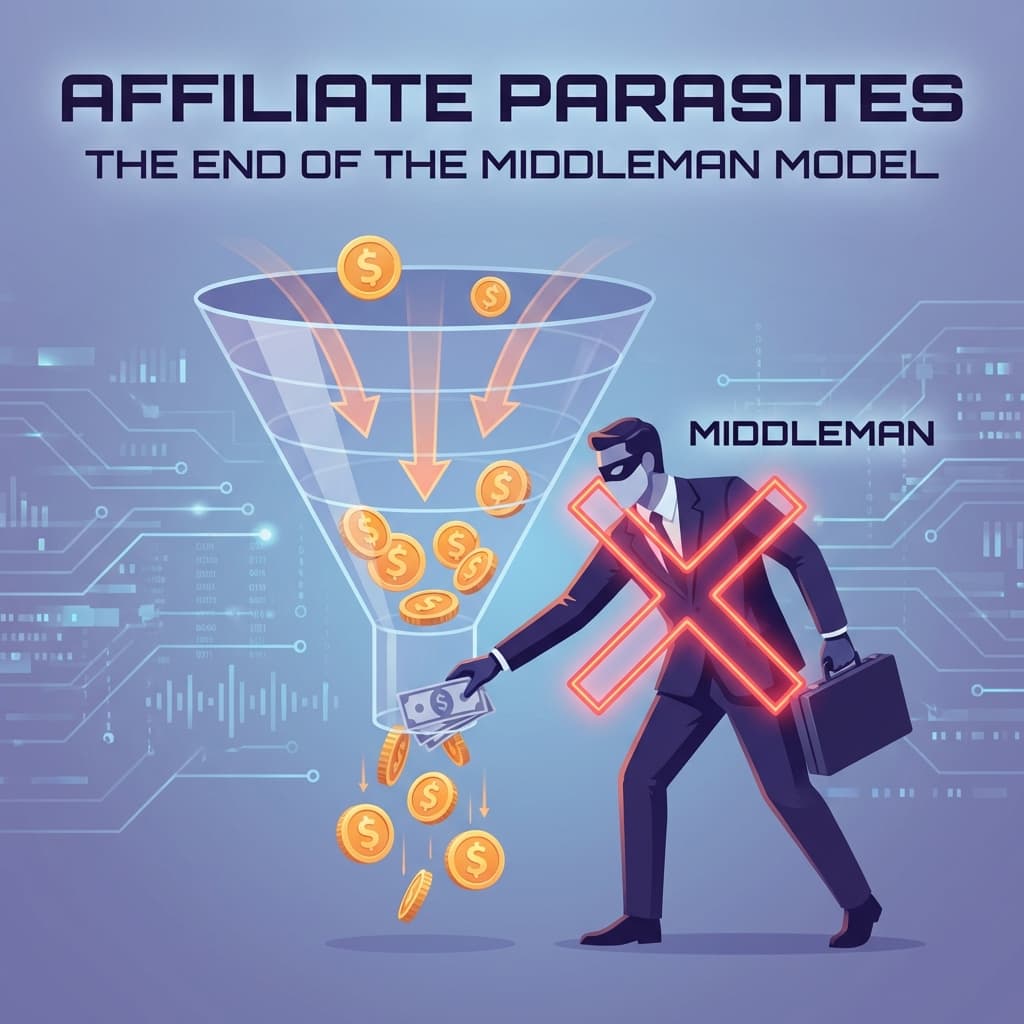
70% of affiliate conversions were from customers who were already on our site, already in our funnel, already going to convert. The affiliate just... existed. They showed up at the last click and stole the attribution.
We weren't paying for new customers. We were paying a 20% tax on customers we already owned.
I killed the program. Deleted it entirely. No wind-down. No "pause." Just gone.
Revenue went... up.
Here is why most affiliate programs are legalized theft — and why yours probably is too.
Section 1: The Attribution Fraud Problem
Affiliate marketing is built on a fantasy: the idea that affiliates "drive" customers to you.
In reality, many affiliates are not drivers. They are interceptors.
The Last-Click Heist:
Most affiliate programs use "last click" attribution. Whoever gets the final click before purchase gets the commission.
Affiliates have figured this out. They position themselves at the final moment of the buying journey — not the beginning.
How? By buying your own brand keywords on Google.
A customer searches "YourBrand login" (they are already a user). An affiliate's paid ad appears. Customer clicks. Customer converts. Affiliate gets 20%.
That customer was never "acquired" by the affiliate. They were intercepted.
The Coupon Site Scam:
This is the worst offender.
A customer is on your checkout page. Cart full. Credit card in hand. They are about to pay.
Then they see the "coupon code" field. Empty. They think: "Maybe I can find a discount."
They open a new tab. Search "YourBrand coupon code." They land on an affiliate coupon site. The site offers a code (often just your public discount, nothing special). Customer applies it. Completes purchase.
The affiliate claims the conversion. Gets 20%.
That customer was at checkout. They were 99% converted. The affiliate contributed nothing except a distraction that almost caused cart abandonment.
Yet your dashboard shows: "Affiliate revenue: $500."
You are not paying for acquisition. You are paying for interception.
Section 2: The "Wrong Customer" Problem
Even when affiliates genuinely bring new customers, those customers are often the wrong customers.
Affiliates Optimize for Volume, Not Quality:
An affiliate's incentive is simple: get clicks, get conversions, get paid.
They do not care about:
- Whether the customer is a good fit for your product.
- Whether the customer will stay for 12 months.
- Whether the customer will need excessive support.
They care about the transaction. Nothing after.
The Deal-Hunter Problem:
Affiliates attract deal-hunters. People who click on "50% OFF" banners. People who sign up because of a discount, not because of value.
These customers:
- Churn faster (they were price-sensitive, not value-driven).
- Have lower LTV (they downgrade when the discount expires).
- Submit more support tickets (unclear expectations, buyer's remorse).
We analyzed our cohorts. Affiliate-sourced customers had:
- 45% higher 90-day churn than direct customers.
- 30% lower lifetime value.
- 2x the support ticket rate.
The "$320,000 in affiliate revenue" looked impressive in January. By December, after accounting for churn and support costs, the true value was closer to $150,000.
We paid $80,000 in commissions to net $70,000 in actual value.
That is not a 4x ROI. That is barely break-even.
Section 3: When Affiliates Actually Work
I am not saying affiliate marketing is always a scam. There are legitimate use cases. But they are narrower than the industry wants you to believe.
Physical Products with Low LTV:
If you sell a $30 widget and the first purchase is the only purchase, affiliate economics can work.
You pay $6 (20%) for acquisition. You make $24 gross. Fine.
There is no churn to worry about. No LTV distortion. The transaction is the relationship.
True Discovery (Rare):
Some affiliates genuinely introduce products to audiences who have never heard of them. A niche blogger in a specific industry. An influencer with a loyal, trusting audience. A YouTube creator who does deep product reviews.
These affiliates create demand. They don't intercept it.
The problem: they are rare. And they are not the ones dominating your affiliate dashboard. The high-volume affiliates are the coupon sites, the SEO farms, the last-click interceptors.
What Does NOT Work:
- "Comparison" sites: They rank for "Best [Category] 2026" and list whoever pays them the most. Users were already searching; the site just redirected them.
- Coupon aggregators: Pure interception. Zero value.
- SEO farms: They rank for "[YourBrand] review" and exist solely to capture existing demand.
If the affiliate's entire strategy is to capture people who were already looking for you, they are parasites.
Section 4: The Alternative: First-Party Referrals
When we killed the affiliate program, we didn't abandon referral marketing entirely. We just moved it in-house.
Customer Referral Program:
We built a simple referral system: existing customers invite friends. Both get a credit (say, 1 month free).
Key differences from affiliates:
- Incentive alignment: Customers refer people they know. They have reputation on the line. They don't refer bad fits.
- No interception: A friend's recommendation is not "last click fraud." It is genuine influence.
- Better LTV: Referred customers trust the referrer. They arrive with higher intent and stay longer.
The Results (After 12 Months):
- CAC (Customer Acquisition Cost): Dropped 30% compared to the affiliate era. We were no longer paying a tax on existing demand.
- LTV of Referred Customers: 2x higher than affiliate-sourced. They stayed longer, upgraded more often, and required less support.
- Attribution: Crystal clear. We knew exactly who referred whom. No black-box affiliate networks. No murky last-click games.
The Math:
Cost of 1-month credit as referral incentive: ~$50.
LTV of referred customer: ~$600.
That is a 12x return.
Compare to affiliates: $80 commission (20% of first year), LTV of $300 (after churn). That is a 3.75x return — far worse, and that is before accounting for the interception fraud.
Conclusion
Affiliate programs are a shortcut that feels like growth but often isn't.
They look good on dashboards because they take credit for demand you already created. They attract the wrong customers. They extract a tax from your existing funnel.
The affiliate industry has a $12 billion incentive to tell you otherwise. Every network, every "performance marketing agency," every affiliate manager wants you to believe the myth.
Do the analysis. Look at cohort LTV. Trace the customer journeys. Ask: "Would this person have converted anyway?"
If the answer is "probably yes," you are not paying for marketing. You are paying for theft.
Pay your customers, not middlemen. Kill the affiliate program. Watch your real metrics improve.
Written by XQA Team
Our team of experts delivers insights on technology, business, and design. We are dedicated to helping you build better products and scale your business.