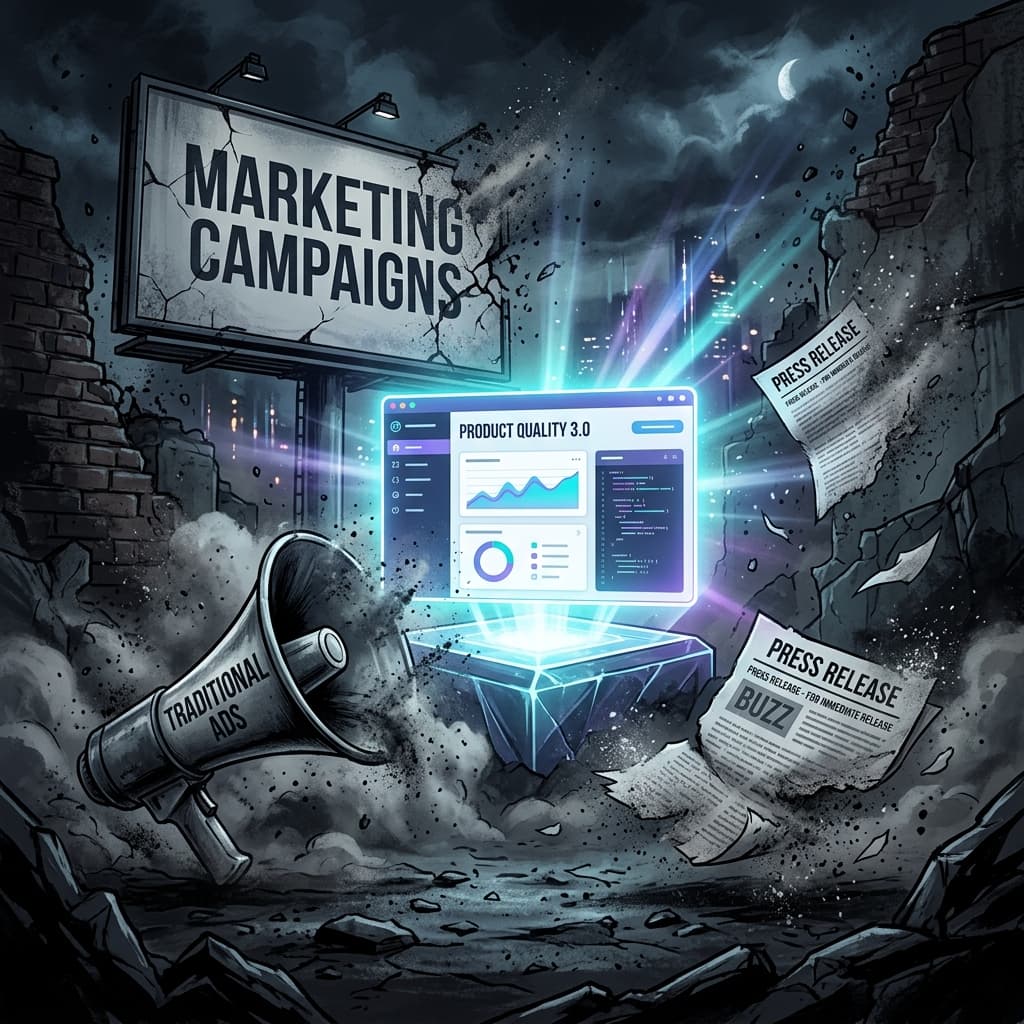
By the end of 2024, our B2B marketing budget had swelled to an astonishing $220,000 per month. This money funded a sprawling apparatus of noise generation. We were paying PR firms to pitch thought leadership articles to Forbes. We were sponsoring webinars that nobody watched. We were running localized LinkedIn ad campaigns with diminishing returns. We were paying a small fortune to industry research firms like Gartner just to be included in a magic quadrant.
And through all of this, our Customer Acquisition Cost (CAC) was climbing exponentially. We were shouting louder and louder into a void that was entirely deaf to corporate messaging.
So, in an act of desperation and clarity, we fired the PR agency. We halted the ad spend. We canceled the enterprise analyst contracts. We reduced the marketing team from twelve people to two. We took the resulting $200,000 per month and handed it directly to the engineering and technical writing teams. We decided that the product would have to speak for itself. It did. Here is why modern SaaS marketing is largely a grift, and what actually works.
The Developer Bullshit Detector
Our target audience consists of senior software engineers, DevOps architects, and Chief Technology Officers. If there is a demographic more hostile to traditional marketing tactics, it has not yet been discovered.
When an engineer sees a gated whitepaper titled "The Future of Digital Transformation in the Cloud," their internal bullshit detector hits maximum instantly. When they receive an automated sequence of SDR (Sales Development Rep) outreach emails leveraging aggressive personalization ("I see you went to the University of Michigan, go Wolverines! Wanted to chat about your CI/CD pipeline..."), they don't reply; they block the domain.
Tech buyers do not buy software because of a display ad. They do not buy software because a PR firm successfully placed an executive quote in a mid-tier tech blog. They buy software because they encounter a specific, painful technical problem, they read the documentation of a tool that claims to solve it, and they try the tool locally. If the tool works, they adopt it. If it doesn't, they discard it. Marketing, as traditionally defined, has absolutely zero influence on this critical evaluation process.
The Pivot to "Product as Marketing"
We took our $200k monthly marketing surplus and fundamentally redefined what we considered "marketing." We realized that anything a user touches before deciding to buy is, by definition, marketing. Therefore, product performance and documentation are the two most powerful marketing channels in existence.
1. Documentation as the Vanguard
We hired three incredibly talented, highly compensated technical writers who had former engineering experience. Our mandate to them was simple: build the most beautiful, comprehensive, and ruthlessly honest documentation in the industry.
We stopped trying to SEO our way to the top with generic blog posts ("What is an API?"). Instead, we wrote deeply technical, problem-specific tutorials in our documentation. If an engineer Googled a highly specific error code related to asynchronous distributed queuing, our documentation ranked first—not because we stuffed keywords, but because we actually provided a brilliantly written, code-heavy solution to the problem.
When engineers landed on our docs, they found no pop-ups asking for their email. No chat widgets asking "How can I help you today?" Just pristine typography, rapid-loading pages, and dark-mode syntax highlighted code examples that they could copy and paste directly into their terminal. That experience built more brand trust in three minutes than a decade of LinkedIn banner ads.
2. Extreme Performance Optimization
We allocated significant engineering budget to micro-optimizations that had zero direct feature value but massive perceptual value. We shaved 400 milliseconds off our dashboard load time. We optimized our CLI tool so that commands executed in under 50 milliseconds. We rewrote our core API endpoints in Rust to reduce p99 latency.
Why is this marketing? Because speed is the ultimate indicator of quality for a technical audience. When a developer types a command into their terminal and the response is instantaneous, they subconsciously assume the entire backend architecture is brilliant. Fast software feels reliable. Slow software feels fragile. We realized that latency was killing our conversions.
3. Open Source Deficit Spending
Instead of sponsoring incredibly expensive booths at corporate tech conferences (AWS re:Invent, KubeCon) where we competed with 500 other vendors giving out identical branded socks, we took that budget and sponsored open-source maintainers. We built genuinely useful, free, open-source utilities that adjacent developer communities needed, and we gave them away with zero strings attached and no email gating.
The goodwill this generated in the developer community was profound. It created organic, unprompted word-of-mouth recommendations in private Slack communities and Discord servers—the only marketing channels that engineers actually trust.
The Gartner Illusion
The most terrifying cut we made was eliminating our spending on enterprise industry analysts like Gartner and Forrester. In the B2B world, paying these firms hundreds of thousands of dollars for "advisory services" (which magically helps you appear on their prestigious Magic Quadrants) is considered the cost of doing business. Investors demanded we participate. We refused.
Our hypothesis was that modern CTOs no longer make purchasing decisions based on a quadrant drawn by an MBA analyst who hasn't written a line of code since 1998. We hypothesized that CTOs make decisions by asking their lead engineers, "What tool do you want to use?"
We were right. We vanished from the Magic Quadrant. Our enterprise sales did not dip. In fact, our sales cycle accelerated because we weren't waiting for bureaucratic IT committees to review analyst reports; we had a bottom-up adoption model where the engineering teams forcefully demanded our software because they loved using it.
The Financial Reality
Twenty-four months after killing the traditional marketing department, the numbers were indisputable:
- Inbound Trajectory: Unique site visitors dropped by 40% (we lost all the useless ad traffic). However, trial signups increased by 115%. Less noise, more signal.
- Customer Acquisition Cost (CAC): Plunged from $4,200 to $850.
- Sales Cycle: Decreased from an average of 90 days to 28 days. Because prospects educated themselves entirely through our documentation, they arrived at the sales call ready to buy, not ready to be pitched.
Conclusion
Marketing departments in tech companies are largely trapped in a localized illusion. They measure success by MQLs (Marketing Qualified Leads), webinar registrations, and ad impressions—metrics that justify their budget but rarely correlate with sustained revenue growth. They operate under the delusion that you can trick a highly intelligent technical audience into desiring a mediocre product.
You cannot hack trust. You cannot growth-hack respect. If you are building software for professionals, stop spending money trying to convince them that you are great. Take that money, hire better engineers and better writers, and actually be great.
The highest ROI marketing strategy in the history of software is a product so undeniably fast, reliable, and well-documented that your users become your salespeople. Kill your marketing budget. Fund your engineering.
Written by XQA Team
Our team of experts delivers insights on technology, business, and design. We are dedicated to helping you build better products and scale your business.