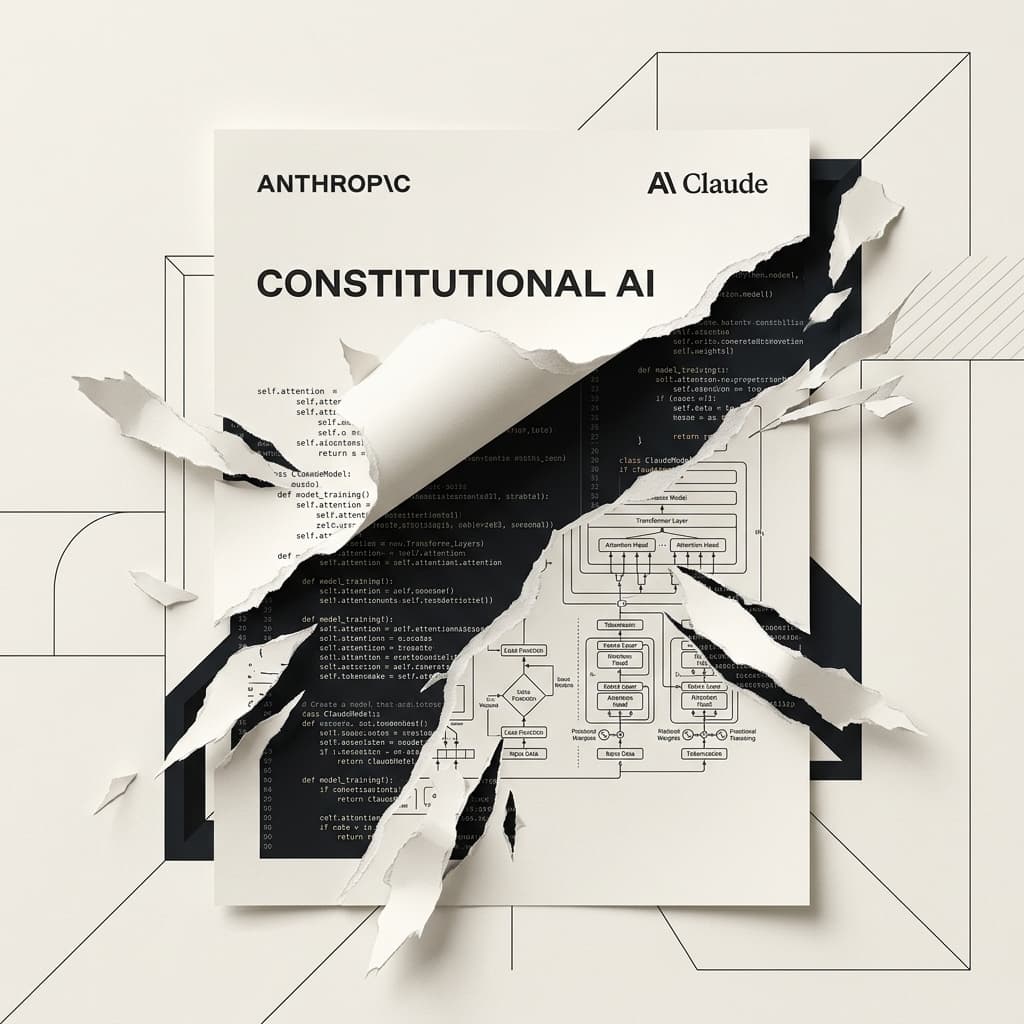
By 2024, the tech industry was obsessed with 'The AI Moat.' VCs were pouring billions into companies that claimed to have a proprietary 'Agentic Orchestration' layer—the secret sauce that makes Claude 'smarter' than GPT-4 in a coding environment. By 2026, the 'Anthropic Leak' has shattered that moat. A single packaging mistake has accidentally open-sourced the world's most advanced AI agent, and the business world is reeling.
The leak of **Claude Code**'s source code was not a sophisticated state-sponsored cyberattack. it was a simple human oversight: a release-day misstep that included a 1.2GB source map in a public npm package. That 'packaging mistake' has effectively commoditized years of Anthropic's proprietary R&D, and the cost to the company's valuation is estimated to be over $100 million.
For every CEO and Board Member, this is a case study in the extreme fragility of intellectual property in the age of generative AI. Here is the business reality of the Anthropic leak.
The Commoditization of the 'Agentic Loop'
Anthropic's strategic advantage in the developer market was built on the back of the Claude Code Agent. It wasn't just the 'Claude 3.5 Sonnet' model; it was the way the agent was programmed to 'think' inside the terminal. The Orchestration Layer—the code that handles planning, error recovery, and tool-use—is the most valuable part of an AI company's intellectual property.
By leaking the source code, Anthropic has effectively 'tipped their hand' to the entire world. Every startup and every competitor now knows exactly how Anthropic structures their most successful agents. They know the prompts, the state machines, and the internal 'agentic loops' that make Claude so effective. Within 24 hours of the leak, mirrors of the code were globally accessible, and the 'secret sauce' became a public commodity.
The 'Hydra' Problem: Intellectual Property in the Distributed Age
Anthropic has deployed an army of lawyers to send DMCA takedown notices to GitHub. For every repository they take down, five more appear under a different name. The code is being shared on **IPFS** (InterPlanetary File System) and **Arweave**, where it is effectively permanent and immune to traditional legal 'takedowns.' The 'Internet Never Forgets' isn't just a meme; it's a financial nightmare for Anthropic.
The mirrors aren't just on GitHub. They are in private Slack channels, Discord servers, and local hard drives. The business reality is that **you cannot un-leak code.** Once the blueprints for your 'moat' are in the wild, the moat is gone. You can no longer charge a premium for 'proprietary' orchestration when the world can build it for free using your own source code as a reference.
The Valuation Shock: The $100 Million Oversights
Before the leak, Anthropic's 'Developer Ecosystem' was valued as a multi-billion-dollar business unit. After the leak, the premium associated with that ecosystem is under threat. If a developer can get 'Claude Code' performance from an open-source tool like Aider (which is now integrating the leaked patterns), why would they pay for the official Anthropic version?
The 'packaging mistake' is the ultimate 'Fat Finger' error for the AI era. It proves that all the security in the world (soc2, iso27001, etc.) is worthless if you have a single point of failure in your release process. Anthropic's board is now facing the reality that their most valuable software asset has been 'open-sourced' without their permission, and there is no 'Ctrl-Z' for a public npm release.
The Lesson for Business Leaders
The Anthropic leak is a warning: **Your Moat is only as deep as your .npmignore file.** We are building in an era where software deployment is almost entirely automated. That automation is a massive risk if it isn't governed by a level of security that matches the value of the intellectual property being released.
Business leaders must now demand **'Zero-Trust Release Governance.'** You cannot 'trust' that your engineers will remember to exclude the source maps. You must have automated, air-gapped verification systems that 'audit the binary' before it is published to the public. If you are building a $100 million asset, you shouldn't be releasing it with a $0 script.
Conclusion
Anthropic will survive this leak, but the 'proprietary agent' market has been permanently changed. The price of 'orchestration' is heading toward zero. The value is shifting back to the models and the compute, while the 'loops' that we thought were moats are becoming common knowledge. Anthropic's $100 million mistake is the world's $100 million masterclass.
The secret is out. The moat is dry. The builders are the winners. If you are building a business on 'proprietary agents,' make sure your release pipeline is as smart as your model. Anthropic didn't, and they paid the price.
Written by XQA Team
Our team of experts delivers insights on technology, business, and design. We are dedicated to helping you build better products and scale your business.