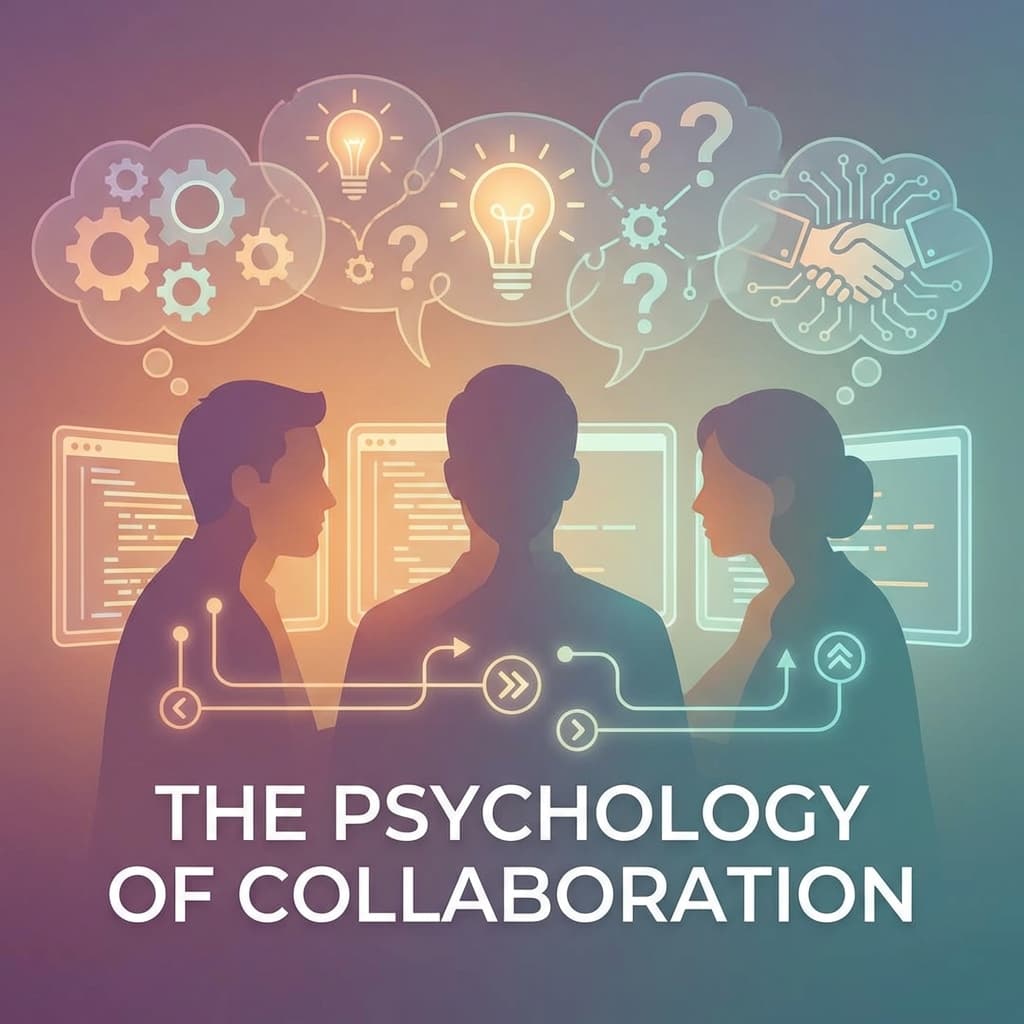
The Hidden Emotional Stakes of Code Review
A developer submits a pull request representing three days of careful work. Hours later, comments appear: "This approach is wrong," "Why didn't you use X instead?", "This doesn't make sense." The developer's heart rate increases. Defensiveness rises. What was intended as technical feedback feels like personal criticism.
Code review is far more than a technical practice—it is a deeply human interaction where professional identity, expertise, and ego intersect. Developers often identify strongly with their code. Criticism of code can feel like criticism of self. Understanding this psychological dimension is essential for creating review cultures that improve code quality while strengthening team relationships.
Research in organizational psychology reveals that how feedback is delivered matters as much as what feedback says. Teams with psychologically safe code review practices—where members feel comfortable receiving and giving constructive criticism—consistently outperform teams where reviews trigger defensive reactions. This guide explores the psychology underlying effective code review and practical strategies for building healthier feedback cultures.
The Negativity Bias Problem
Human brains are wired with a negativity bias—we pay more attention to negative information than positive. This evolutionary adaptation helped our ancestors survive threats but creates problems in code review contexts. A developer might receive ten approving comments and one critique, yet the critique dominates their emotional response and memory of the review.
This asymmetry means reviewers must consciously counterbalance criticism with positive observations. The often-cited "praise sandwich" (positive-negative-positive) can feel formulaic, but the underlying principle is sound: ensuring developers receive recognition for what they did well, not just what needs improvement.
Effective reviewers develop habits of noticing good code: elegant solutions, thoughtful error handling, clear naming, comprehensive tests. Commenting on these positives is not empty cheerleading—it signals what the team values and reinforces behaviors worth repeating.
The Language of Review Comments
The phrasing of review comments profoundly impacts how they are received.
Questions vs. Statements
"This is inefficient" reads as judgment. "Have you considered using a hash map here for O(1) lookups?" invites dialogue. Questions acknowledge that the reviewer might lack context and creates space for explanation. Even when the reviewer is confident the code needs changing, framing feedback as questions reduces defensiveness and opens productive conversation.
First Person vs. Second Person
"You made an error here" assigns blame. "I'm confused about why this returns null" focuses on the reviewer's understanding rather than the author's mistake. First-person framing acknowledges that the confusion might be the reviewer's, not necessarily evidence of flawed code.
Specific vs. Vague
"This needs refactoring" provides no actionable guidance. "This 200-line method handles parsing, validation, and database writes—could we extract parsing into a separate function for testability?" explains both the observation and a potential solution. Specific feedback respects the author's time and demonstrates reviewer investment in helping, not just criticizing.
The Curse of Expertise
Senior developers sometimes forget what it was like not to know things. Patterns and practices that seem obvious after years of experience were once novel discoveries. This curse of expertise can make reviewers impatient with approaches that seem naive or suboptimal.
Effective senior reviewers remember that code review is a teaching opportunity, not just a quality gate. When identifying issues, explaining why something is problematic teaches principles that prevent future similar issues. "Use dependency injection here" tells the author what to change but not why. "Dependency injection here would let us mock the database in unit tests—currently this method is only testable via slow integration tests" transfers understanding.
The best reviewers view knowledge gaps as their responsibility to fill, not as evidence of the author's deficiency. They create learning moments rather than judgment moments.
Managing Reviewer Fatigue
Reviewing code is cognitively demanding. Attention to detail deteriorates over time. Studies suggest review effectiveness drops significantly after 60-90 minutes of concentrated review work. Reviewers examining large pull requests or conducting multiple reviews consecutively may miss issues they would catch when fresh.
Teams can mitigate reviewer fatigue through structural practices. Keep pull requests small—ideally under 400 lines of changed code. Spread review responsibility across the team rather than concentrating it on senior developers. Encourage reviewers to take breaks between reviews and to avoid reviewing when already cognitively depleted.
Authors can help by ensuring their code is review-ready before requesting review. Clear descriptions of what the change does and why, organized commits that tell a story, and pre-review self-review all reduce reviewer cognitive load and improve review quality.
Receiving Feedback Gracefully
Learning to receive feedback well is as important as learning to give it.
Assume Good Intent
When a comment feels harsh, assume the reviewer is trying to help rather than attack. Text lacks tone cues that soften in-person feedback. A comment that reads as blunt criticism may have been written with helpful intent but without attention to phrasing.
Separate Code from Self
Your code is something you created, not something you are. Criticism of code is feedback on artifact, not assessment of your value as a developer or person. This separation is intellectually simple but emotionally challenging—developing it takes practice.
Ask Clarifying Questions
When feedback is unclear or you disagree, ask questions before defending. "Can you help me understand why you prefer approach X?" opens dialogue. Defensive responses ("This works fine as-is") close it. The reviewer may have knowledge you lack, or you may have context they lack—dialogue surfaces these gaps.
Express Gratitude
Thanking reviewers for catching issues is not sycophancy—it is acknowledgment that they invested time in improving your code. Genuine appreciation reinforces the behavior and builds relationships that make future reviews more collaborative.
Building Psychological Safety
Psychologically safe teams are ones where members feel comfortable taking interpersonal risks—asking questions, admitting mistakes, proposing novel ideas—without fear of embarrassment or punishment. Code review practices both reflect and shape team psychological safety.
Leadership Modeling
When senior developers and managers submit code for review—and gracefully accept feedback—they model that review is a learning process for everyone, not just junior developers. Leaders who become defensive when reviewed signal that defensiveness is acceptable; leaders who thank reviewers for catching issues signal learning orientation.
Normalizing Imperfection
Every developer writes bugs. Every design has tradeoffs. Normalizing the acknowledgment of imperfection reduces the stigma of receiving feedback. Teams that celebrate learning from mistakes rather than penalizing them create environments where review feedback is welcomed rather than dreaded.
Retrospectives on Review Process
Periodically discuss how code review is working for the team. Are reviews timely? Do developers feel feedback is helpful? Are there patterns of interpersonal friction? Explicit attention to review health catches problems before they calcify into toxic patterns.
Conclusion: Review as Collaboration
The highest-performing engineering teams treat code review not as gatekeeping but as collaboration. The reviewer is not an adversary to satisfy but a partner in producing excellent code. The author is not a defendant presenting evidence but a collaborator seeking input.
Building this collaborative culture requires conscious attention to the psychological dimensions of feedback—the language we use, the assumptions we make, the emotional intelligence we bring. Technical expertise is necessary for good code review but not sufficient. The human element determines whether reviews improve both code and relationships or achieve technical correctness at the cost of team health.
Invest in the human side of code review. The returns—in code quality, team cohesion, and individual growth—compound over years of practice.
Written by XQA Team
Our team of experts delivers insights on technology, business, and design. We are dedicated to helping you build better products and scale your business.