We had two pricing tiers:
- Starter ($50/month): Email support, 48-hour response time.
- Pro ($500/month): Dedicated Customer Success Manager (CSM), scheduled onboarding calls, quarterly business reviews.
Our best customer — a Fortune 500 company with 200 engineers — chose Starter.
I was confused. I called them. "Don't you want a dedicated rep? White-glove support?"
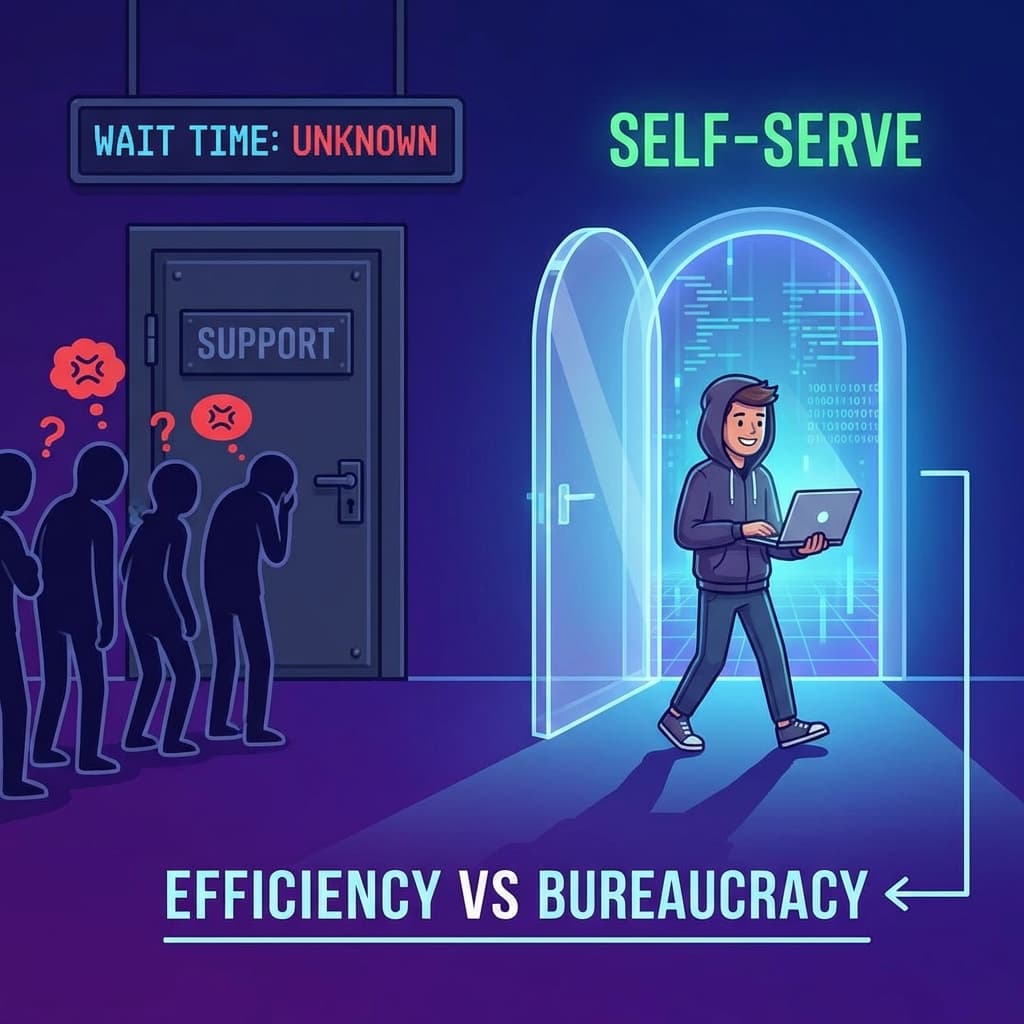
The Engineering Lead laughed. "God no. We have 50 internal engineers who know your product better than your CSMs. We don't need someone explaining things to us. We need your API docs to be good. And 'white glove' means you'll schedule meetings. We hate meetings. Just let us self-serve."
That conversation broke my brain.
We were bundling "Support" as a premium feature. But for sophisticated customers, support was a burden, not a benefit.
We were charging them for something they actively didn't want.
Here is how we flipped our pricing model and accidentally discovered the most profitable tier in our company.
Section 1: The "Support Tax" Problem
Traditional SaaS pricing follows a pattern:
- Basic Tier: Cheap. Minimal features. Email support.
- Pro Tier: Expensive. More features. Dedicated support.
- Enterprise Tier: Very expensive. All features. White-glove everything.
This assumes that "More Support = More Value." For consumer-grade software, this is true. A small business owner needs hand-holding.
But for Developer Tools and Technical Products, the equation flips.
The Technical Buyer Persona:
Our customers are Engineering teams. They are the experts. They read docs. They debug issues themselves. They contribute to Stack Overflow.
When you give them a CSM who schedules "onboarding calls," they groan. The CSM knows less about the product than they do. The call is a waste of their time.
They would pay more to not have calls.
The Support Tax:
By bundling support into the higher tier, we were effectively "taxing" technical competence.
Sophisticated customers who didn't need support were forced to pay for it anyway. They resented it. They looked for alternatives.
Section 2: The "Self-Serve Premium" Model
We created a new tier: "Developer" ($300/month).
Higher than Starter ($50). Lower than Pro ($500).
What "Developer" Tier Includes:
- No CSM: Zero scheduled calls. Zero business reviews.
- Dedicated Slack Channel: Async questions answered by engineers (not support reps) within 4 hours.
- Premium Documentation: Extended API reference, advanced tutorials, architecture guides.
- Public Roadmap: Vote on features. See what's coming.
- Early Access: Beta features before general availability.
What "Developer" Tier Excludes:
- Onboarding calls.
- Training sessions.
- Quarterly Business Reviews (QBRs).
- Any form of scheduled human interaction.
The Positioning:
"For teams who don't need hand-holding. Just the tools and the docs."
This tier became our most popular among technical buyers. Engineering-led companies flocked to it.
Section 3: The Economics of No Humans
Let's do the math.
The Cost of a CSM:
- Salary + Benefits + Overhead: ~$100,000/year (fully loaded).
- A CSM can manage ~20 accounts effectively.
- Cost per Account: $5,000/year.
If you charge $500/month for "Pro" tier ($6,000/year), and $5,000 goes to the CSM, your margin is $1,000/year per account.
The "Developer" Tier Math:
- Price: $300/month ($3,600/year).
- Cost: ~$0 marginal (no human assigned).
- Margin: $3,600/year per account.
By removing the CSM, we tripled the margin on technical accounts.
Reinvesting in Self-Serve:
We took the savings and invested them in:
- Better Documentation: We hired a technical writer. Docs went from "okay" to "exceptional."
- Interactive Tutorials: Built-in guides that walk you through the product.
- Community Forum: Engineers helping engineers (moderated by us).
These investments helped all tiers, not just Developer. Rising tide, all boats.
Section 4: When To Offer (And Not Offer) Human Support
This doesn't mean "Kill all Support." It means Segment your Support.
Offer Human Support When:
- Non-Technical Buyers: Marketing teams using analytics tools. Sales Ops using CRM integrations. They need hand-holding.
- SMBs without Internal Experts: A 5-person startup doesn't have a dedicated DevOps engineer. They need your CSM.
- Complex Implementations: If the integration takes 3 months and involves multiple stakeholders, a CSM is valuable for project management.
Skip Human Support When:
- Technical Buyers (Engineering Teams): They find "onboarding calls" patronizing. They want docs, not demos.
- Developer Tools / APIs: The product is self-explanatory to the target user.
- Fast Integration: If setup takes < 1 day, there's nothing for a CSM to "manage."
Letting Customers Choose:
We now let customers choose their support level at checkout.
"Do you want a dedicated CSM? (+$200/month)" — 70% of technical accounts say "No."
"Do you want self-serve with async support? (Included)" — They love it.
Conclusion
Stop assuming "More Support = More Value."
For sophisticated users, Support is friction. It is meetings they don't want. It is explanations they don't need.
Treat your smartest customers as what they are: Self-Sufficient Adults.
Charge them less for less hand-holding. Make more margin. Everyone wins.
Written by XQA Team
Our team of experts delivers insights on technology, business, and design. We are dedicated to helping you build better products and scale your business.