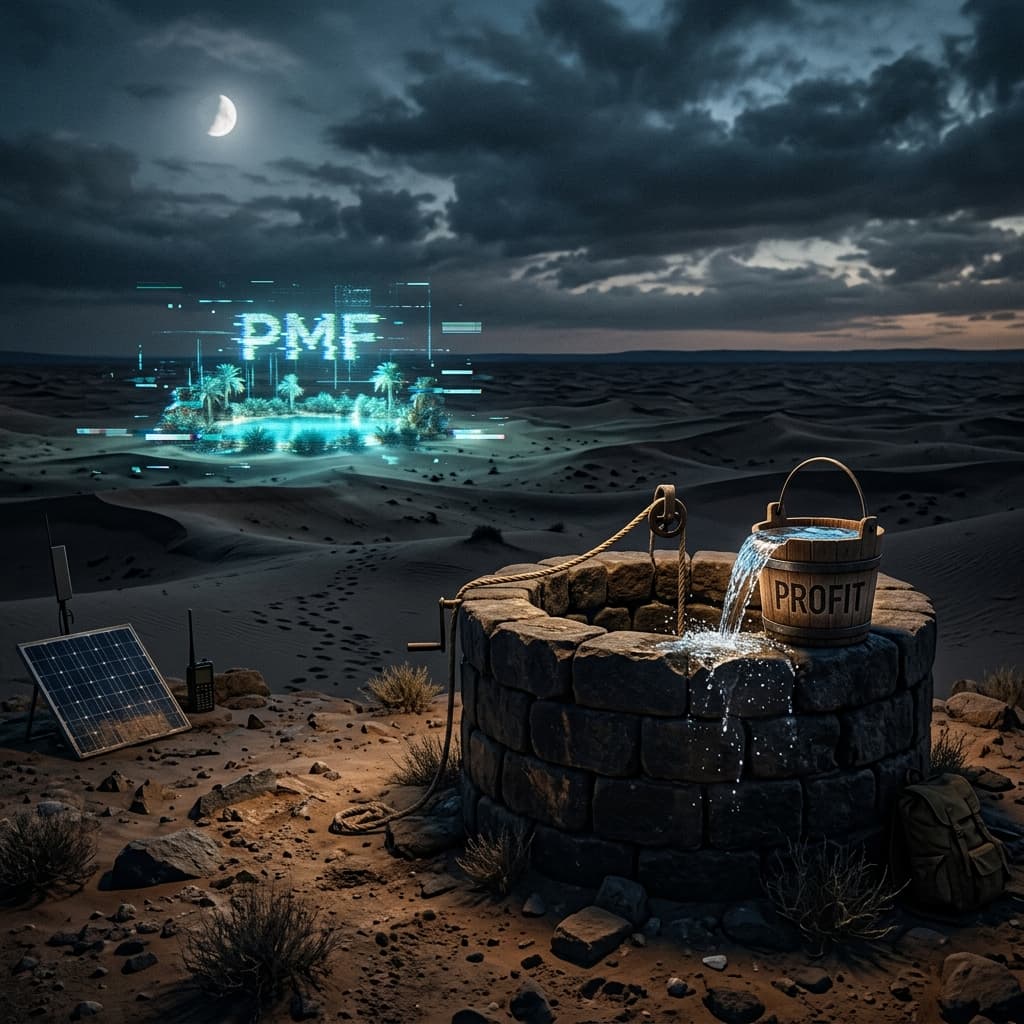
By mid-2024, our "metrics" were perfect. We had a high NPS, a daily active user count (DAU) that was climbing 20% month-over-month, and a viral coefficient that would make any venture capitalist salivate. We were "chasing the dragon" of Product-Market Fit (PMF). We believed that if we could just reach a certain critical mass of users, revenue would magically follow.
But when we looked at our bank account, we saw a different story. We had a $200k monthly burn rate and exactly zero revenue. We were subsidized by the kindness of strangers (investors) who also believed in the PMF mythology. We were building a house on a foundation of "free users" who had no intention of ever paying for our service.
We decided to stop. We threw away our "PMF charts," we turned off the free tier, and we started charging for our product from day one. We stopped chasing "Growth" and started chasing "Profit." Here is why PMF is often a toxic mirage and why you should focus on unit economics instead.
The Freemium Trap
Freemium is the most popular way to "find PMF." The logic is simple: give the product away for free, get people hooked, then upsell them on premium features. In reality, freemium creates two distinct classes of users: "Free Loaders" and "Customers." The things that make a free loader happy are almost never the same things that a paying customer wants.
We spent 80% of our engineering time fixing bugs and adding features for users who were never going to pay us a dime. They were the loudest voices in our feedback channels, they were the ones most likely to complain on social media, and they were the ones who skewed our "usage data." We were optimizing for a demographic that didn't exist in our business model.
When we killed the free tier, 90% of our users left. We were terrified. We thought we had destroyed the company. But the 10% who stayed were the ones who actually valued the software. They were the ones who were willing to pull out a credit card. They are our real market.
Growth at All Costs vs. Sustainable Margin
The "PMF-first" mentality encourages "Growth at All Costs." It justifies losing money on every customer because "we'll make it up on volume." This is the underlying philosophy that led to the collapse of countless tech companies in the last decade.
We realized that if we couldn't make a profit on a single customer, we certainly couldn't make a profit on a million of them. We pivoted our focus to "Gross Margin." We ruthlessly cut the features that were expensive to maintain but had low value. We raised our prices to reflect the actual cost of our infrastructure and personnel. We prioritized unit economics over user counts.
The 'Product-Profit Fit' (PPF) Model
We coined a new term: **Product-Profit Fit (PPF).** PPF is when you have built something that a customer is willing to pay more for than it costs you to deliver. It is the only metric that guarantees the survival of your business without perpetual investor support.
To find PPF, we stopped guessing. We launched "experimental" paid features every week. We didn't wait for them to be "perfect." We just wanted to know if anyone would pay for them. If they didn't, we killed the feature and moved on. We found that the market is a much faster and more honest feedback mechanism when money is involved.
The Investor Delusion
The biggest obstacle to "Product-Profit Fit" was our own board. They didn't want profit; they wanted "Growth Potential." They wanted us to burn $200k a month to acquire more users so they could raise a Series B at a higher valuation. They were playing a game of "Greater Fool Theory," where the Goal is to sell the company to someone else before the money runs out.
We stopped playing that game. we told our investors that we were focused on profitability. Some were furious. Others were relieved. We stopped needing them. When you are profitable, you don't have to "ask" for permission to exist. You own your destiny.
Conclusion
Product-Market Fit is a term invented by VCs to describe a state where they can safely pump more capital into a company. It is not a business model. A business model requires revenue. A sustainable business model requires profit.
Stop chasing the metric. Start chasing the check. If nobody is willing to pay for your product, you don't have "Product-Market Fit"—you have a hobby. Build for profit, build for margin, and build for the long-term. The oasis is a mirage; the well is where the water is.
Written by XQA Team
Our team of experts delivers insights on technology, business, and design. We are dedicated to helping you build better products and scale your business.