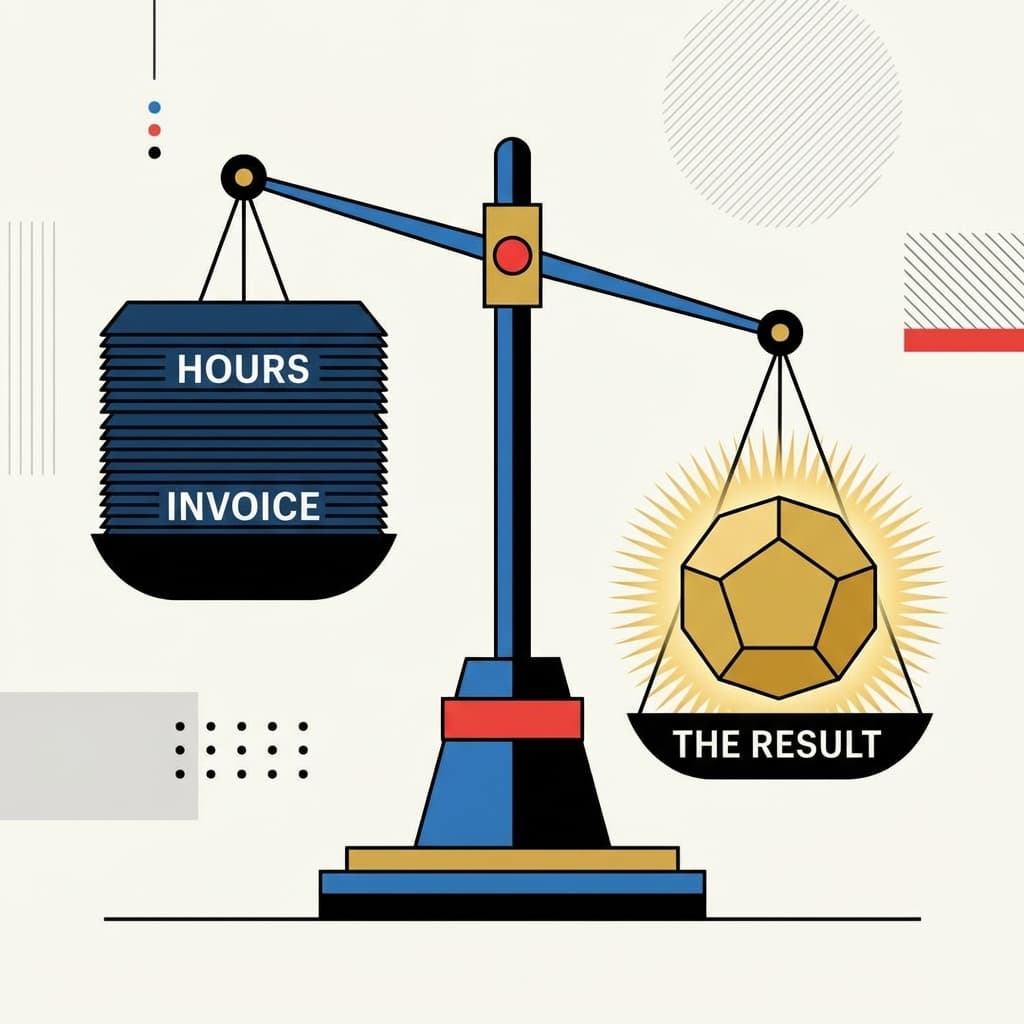
The Churn Problem: A Crisis of Value
Q3 2025 was a bloodbath for our SaaS product. We were doing everything "right." We had a polished UI. We had 99.9% uptime. We had a friendly support team. And yet, our monthly churn rate hit 8%. At that rate, we would be out of business in 12 months.
I went into crisis mode. I personally called 50 customers who had cancelled in the last week. I prepared myself for the usual feedback: "It's too buggy," or "It's too expensive," or "My boss cut the budget."
I didn't hear any of that.
Instead, I heard the same phrase, over and over again, like a haunting refrain:
"I love the tool. I just didn't use it enough this month to justify the $49 charge."
They weren't leaving because the product was bad. They were leaving because of Subscription Guilt. Every month, the Stripe invoice arrived in their inbox like a teacher scolding them for not doing their homework. The invoice reminded them of their failure to utilize the tool. So they cancelled, not to save money, but to stop the emotional tax.
The "Cableization" of SaaS: Historical Context
To understand why this is happening now, we need to look at the macro environment. We have reached Peak Subscription.
In 2015, the average business had 5 SaaS subscriptions. In 2026, the average SMB has 40. The average Enterprise has 300.
The modern CFO looks at their credit card statement and sees a landfill of recurring charges: $10 for this, $29 for that, $99 for a tool that one guy used once three years ago. It feels exactly like the Cable TV bundles of the early 2000s—you pay $150 a month for 500 channels, but you only watch three.
Customers are becoming hostile to the very idea of "renting software." The friction of signing up for another monthly recurring charge is at an all-time high. The "SaaS Fatigue" is real, and it is killing your conversion rates.
The Pivot: Entering the Outcome Economy
We decided to do something radical. Something that terrified our investors. We realized that our business model (selling access) was misaligned with our customer's goal (getting results).
We deleted the "Pricing" page. We killed the $49/month and $99/month tiers. We stopped charging for seats. We stopped charging for features.
Instead, we introduced Outcome-Based Pricing.
Our tool helps B2B sales teams find leads. In the old model, you paid for the privilege of searching our database. In the new model, the search is free. The filtering is free. The export is free.
You only pay when you close a deal that originated from our data.
(Okay, technically we used a proxy metric: "Verified Lead Export," but the principle stands). If you use our tool and find nothing? You pay $0. No guilt. No churn.
Risk vs. Reward: The Valley of Death
The first month after the switch was the scariest month of my professional life. Our MRR (Monthly Recurring Revenue)—the holy grail of SaaS metrics—vanished overnight.
Our investors panicked. "Where is the predictability?" they screamed in the board meeting. "How do we model this? How do we raise a Series B without an ARR chart that goes up and to the right?"
I told them to wait.
And then, the data started coming in.
The Metrics That Matter
1. Usage Velocity Exploded: Because users weren't afraid of "wasting a month," they logged in 3x more often. They invited their whole team (since we didn't charge for seats). Our Daily Active Users (DAU) hit an all-time high.
2. The "Whale" Effect: In the subscription model, our biggest customer paid us $99/month. That was the cap. In the outcome model, our biggest customer paid us $4,500 in Month 2. Why? Because they extracted massive value, and they were happy to share a slice of it.
3. Alignment as Marketing: Our marketing copy changed from "Buy our tool" to "Partner with us." We could honestly say: "We only make money when you make money." That is a devastatingly powerful sales pitch in a cynical market.
Our "Revenue per User" actually increased by 40% across the cohort. We lost the "zombie revenue" (people who forget to cancel), but those people were going to churn anyway. We gained a fanatical, high-LTV customer base that viewed us as a partner, not a vendor.
Why AI Accelerates This Trend
This shift isn't just about pricing psychology. It's about the nature of AI work.
As we move from tools (that help humans) to agents (that replace humans), time-based pricing makes no sense. If I hire a lawyer, I pay by the hour. If I use an AI Legal Agent, why should I pay a monthly subscription for it to sit idle?
I should pay per contract reviewed. Per risk flagged. Per compliant filing.
The future of business models is not Access (Subscriptions). It is Utility (Transaction). It represents the "API-fication" of the entire economy.
How to implement Outcome Pricing (Without Going Broke)
If you are thinking of making this switch, here is the playbook:
- Identify the "North Star" Metric: What is the actual value moment for your user? Is it a booked meeting? A processed image? A resolved bug? Charge for THAT.
- Set a Floor: Pure outcome pricing is risky if your costs are high. Consider a hybrid model: A low platform fee (to cover compute) + a high success fee.
- Build Trust: You need rigorous tracking to prove the outcome happened. If you charge per "lead," you better be able to prove that lead was valid.
Conclusion: The Honest Economy
Outcome-based pricing is terrifying because it removes the safety net of "shelfware revenue." You can no longer hide a mediocre product behind a 12-month contract.
But it is the only model that survives in the long term. It forces you to build a product that actually works. It aligns your incentives with your customer's success. If they win, you get paid. If they don't, you starve.
It's distinct. It's dangerous. But it's honest. And in a world of AI noise, honesty is the ultimate growth hack.
Deep Dive: The Psychology of "Zero-Risk" Purchasing
Why does this model work so effectively? It taps into a fundamental psychological principle called Loss Aversion.
In a standard SaaS negotiation, the buyer is taking 100% of the risk. They have to pay $50k/year upfront, before they know if the software works. They are betting their reputation on your tool. If it fails, they lose money and social capital.
In Outcome-Based Pricing, you transfer 100% of the risk to the vendor (you). The buyer thinks: "If this doesn't work, I pay nothing. If it works, I pay from the profits." This removes the friction of the "Purchase Decision." It turns a "Sales Cycle" into a "Partnership Discussion."
The 10-Year Forecast: The End of "Seats"
I predict that by 2030, charging "Per Seat" will be viewed as archaic as charging for long-distance phone calls. In an AI world, who is a "seat"? Is an agent a seat? If I spin up 1,000 agents for 10 minutes, do I pay for 1,000 seats?
The "Seat" is a proxy for human labor. As human labor decouples from value creation, the "Seat" model breaks. We will move to:
- Compute-Based Pricing: Pay for the GPU cycles (AWS model).
- Outcome-Based Pricing: Pay for the result (Uber model).
- Percentage-of-Revenue: Pay a "tax" on the value generated (Stripe model).
Implementing the "Mettered Entropy" Model
If you can't go full outcome (because your outcome is hard to measure, like "better collaboration"), consider the "Metered Entropy" model. Charge for usage that correlates with value, but doesn't punish exploration.
For example, Slack pushes you to a paid tier not based on time, but based on message history. They know that if you have 10,000 messages, you are locked in. You are hooked. Value has been proven.
Find your "10,000 messages" metric. Is it "Rows in Database"? "API Calls"? "Gigs of Storage"? Align your pricing meter with the customer's growth.
The Counter-Argument: Why VCs Hate This
I feel obligated to warn you: Venture Capitalists hate outcome-based pricing initially. Why?
Because it makes financial modeling a nightmare. In SaaS, you can put "100 customers x $50/mo" into a spreadsheet and project revenue for 5 years. In Outcome pricing, revenue is volatile. It's seasonal. It's unpredictable.
How to pitch it to investors:
Don't pitch "Predictability." Pitch "uncapped upside." SaaS is capped. If a user gets $1M of value from your tool, you still only get $50/mo. In Outcome pricing, if they get $1M of value, you might get $50k. You are trading stability for magnitude.
Smart investors (the ones you want) understand this. They know that the biggest companies in the world (Google, Facebook, Visa) are all effectively tax collectors on economic activity, not subscription services.
Appendix: The Contract Clauses That Save You
If you implement this, you need legal protection. Here are three clauses we added to our contracts to prevent abuse:
- The "Good Faith" Clause: If a user generates a lead but doesn't "export" it to avoid paying, we reserve the right to audit their CRM. (We never actually do this, but the threat ensures honest behavior).
- The "Minimum Viable Commit": For Enterprise clients, we still require a $5k/year "Platform Fee." This covers our server costs and filters out non-serious buyers. The outcome fees are on top of this.
- The "Volume Tiering": Our percentage take decreases as volume increases. This prevents the customer from being "punished for success" and churn-ing when they get too big.
Written by XQA Team
Our team of experts delivers insights on technology, business, and design. We are dedicated to helping you build better products and scale your business.